
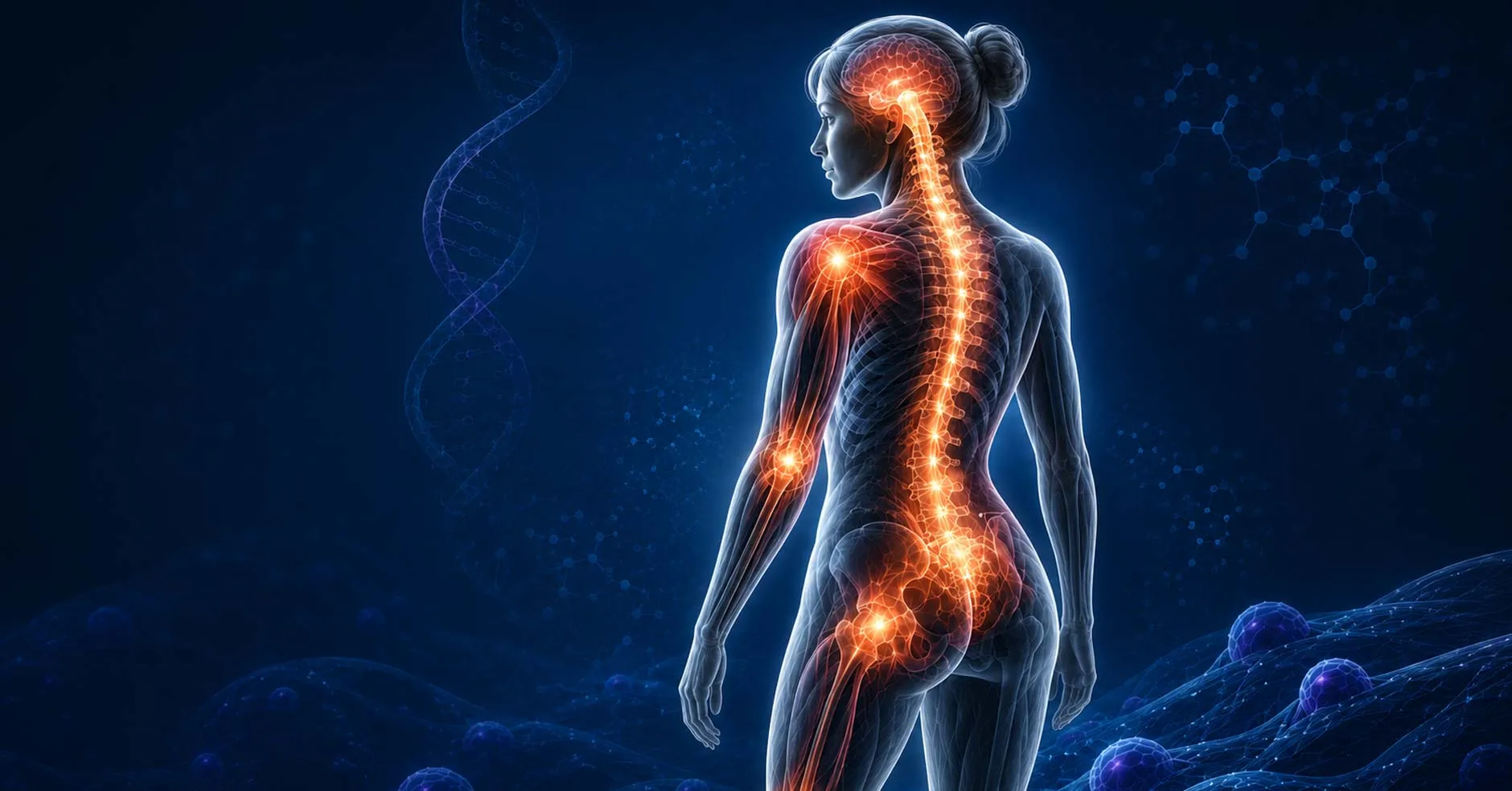
Emerging evidence suggests that hormonal optimization may influence pain modulation, tissue repair, inflammation, and functional recovery.
LEXINGTON — Musculoskeletal medicine has traditionally focused on anatomy. Orthopedic and pain evaluations are often centered on structural pathology: degenerative discs, tendon tears, arthritic joints, spinal instability, or nerve compression. While these factors are undeniably important, an increasing body of evidence suggests that another variable frequently influences pain generation, healing capacity, and recovery trajectory: hormonal regulation.
At Wellward Medical, this recognition has led to a more integrated approach in select patients—one that evaluates not only the structural source of pain, but also the physiologic environment in which that pain exists.
The relationship between hormones and pain is more extensive than many clinicians realize. Pain generation, transmission, and modulation are all influenced by endocrine signaling. Estradiol, testosterone, thyroid hormone, cortisol, and other endocrine factors interact directly with inflammatory pathways, nociceptive circuitry, bone physiology, muscle maintenance, and central nervous system function. Hormonal dysregulation therefore becomes not merely a secondary observation in chronic pain patients, but often a meaningful contributor to the condition itself.
The Hormonal Regulation of Pain
One of the more clinically relevant examples is estradiol. Beyond its reproductive role, estradiol appears to influence nociceptive processing at both spinal and supraspinal levels, contributing to pain transmission and modulation. This relationship is perhaps most visible in patients receiving aromatase inhibitors for breast cancer treatment. Aromatase inhibitor-associated musculoskeletal syndrome (AIMSS) has become increasingly recognized as a consequence of estradiol depletion, often resulting in diffuse joint pain, stiffness, tendon irritation, and increased pain sensitivity.
Similarly, testosterone deficiency has been associated with increased inflammatory activity and chronic pain states in both men and women. Some evidence suggests that testosterone’s analgesic effects may be mediated in part through its conversion to estradiol, further emphasizing the interconnected nature of hormonal signaling.
At Wellward, these relationships are increasingly considered in patients whose symptoms appear disproportionate to imaging findings or whose recovery trajectory remains unexpectedly limited despite otherwise appropriate orthopedic interventions.
Beyond Libido: Hormones as Structural and Neurologic Regulators
Public perception often reduces testosterone and estrogen to conversations surrounding libido or sexual health. In reality, these hormones influence a much broader physiologic landscape.
Adequate testosterone levels in both males and females is associated with maintenance of muscle mass, bone density, tissue repair, neurologic signaling, and overall metabolic resilience. Hormonal deficiency states may contribute to sarcopenia, delayed healing, increased inflammatory burden, reduced stamina, and impaired recovery from injury.
This becomes particularly relevant in musculoskeletal medicine, where recovery depends not only on the correction of structural pathology, but also on the body’s biologic capacity to repair and adapt.
Androgen receptors are present throughout bone tissue, including osteoblasts, osteoclasts, and osteocytes. Estrogen receptors are similarly abundant within bone-forming cells, underscoring the dual role of testosterone and estradiol in skeletal physiology. Hormonal dysregulation may therefore influence not only pain sensitivity, but also bone turnover, tendon resilience, and degenerative progression.
From an inflammatory standpoint, low androgen states are also associated with increased visceral adiposity and chronic inflammatory activation. Molecular pathways involving NF-kB and inflammatory cytokine production appear to become increasingly dysregulated in testosterone-deficient states, potentially contributing to both systemic inflammation and amplified pain signaling.
Chronic Pain and the Endocrine Cascade
The relationship between chronic pain and hormones is often bidirectional. Chronic pain itself acts as a physiologic stressor capable of disrupting endocrine balance, while endocrine dysfunction may simultaneously worsen pain perception and impair healing.
This interaction becomes especially important in patients with chronic opioid exposure. Long-term opioid use suppresses the hypothalamic-pituitary-gonadal axis, often resulting in secondary testosterone deficiency known as opioid-induced androgen deficiency (OPIAD). Persistently low testosterone levels in these patients may contribute to fatigue, depression, decreased muscle mass, impaired function, and worsening musculoskeletal resilience.
At Wellward, evaluation of chronic pain patients—particularly those with prolonged opioid exposure—often includes assessment of metabolic and hormonal health alongside structural diagnostics. In selected patients, addressing hormonal dysregulation may improve energy, recovery capacity, pain tolerance, and overall function.
Importantly, bioidentical hormone replacement therapy (BHRT) is not positioned as a replacement for orthopedic treatment, rehabilitation, regenerative medicine, or surgical care. Rather, it may serve as a complementary strategy aimed at optimizing the physiologic environment in which healing occurs.
Integrating Hormonal Optimization into Musculoskeletal Care
This broader framework has become increasingly relevant in patients who fall into a therapeutic gray zone: those whose imaging findings only partially explain their symptoms, patients struggling with persistent fatigue and poor recovery despite otherwise appropriate interventions, or individuals whose pain appears amplified by systemic inflammation and physiologic decline.
For example, a patient presenting with chronic tendinopathy and progressive joint degeneration may simultaneously demonstrate low testosterone levels, reduced muscle mass, sleep disruption, increased visceral adiposity, and diminished exercise tolerance. Structural interventions alone may improve symptoms temporarily, but recovery often remains limited if the underlying physiologic terrain remains unfavorable.
Similarly, perimenopausal and post-menopausal patients frequently report diffuse musculoskeletal pain, stiffness, reduced recovery capacity, and progressive decline in strength or endurance. While these symptoms are often attributed to aging or arthritis, hormonal shifts may represent a meaningful and modifiable contributor.
At Wellward, this has led to a more integrated treatment philosophy in select patients—combining orthopedic diagnostics, rehabilitation strategies, regenerative medicine, and metabolic or hormonal optimization into a coordinated plan centered on function and long-term resilience.
Precision Rather Than Overcorrection
As interest in hormone optimization has grown, so too has concern regarding overuse, inappropriate prescribing, and exaggerated claims. These concerns are valid.
Hormonal therapies are not universally appropriate, nor are they intended to function as anti-aging shortcuts or stand-alone solutions for chronic pain. Careful patient selection, laboratory evaluation, monitoring, and individualized risk assessment remain essential.
At the same time, dismissing the endocrine contribution to pain and healing may overlook an important dimension of musculoskeletal medicine. The emerging intersection between orthopedics, pain medicine, endocrinology, and regenerative medicine suggests that future treatment models may become increasingly integrated rather than siloed.
Conclusion
The future of musculoskeletal care may depend not only on identifying structural pathology, but also on understanding the physiologic systems that influence pain sensitivity, inflammation, healing capacity, and recovery.
Hormonal regulation represents one of those systems.
Approaches such as those implemented at Wellward reflect a growing recognition that successful orthopedic and pain care often requires more than simply targeting anatomy alone. By integrating structural diagnostics with broader physiologic optimization—including, when appropriate, bioidentical hormone replacement therapy—clinicians may improve not only symptom management, but overall functional trajectory and quality of life.
As medicine continues to evolve toward more personalized models of care, the intersection of hormones and musculoskeletal medicine may become increasingly difficult to ignore.