
Insights from the 2026 KPMA Annual Conference
LOUISVILLE The value of a conference is clearer after you connect the dots. That was my experience at the 2026 Kentucky Psychiatric Medical Association Annual Conference on March 13 in Shelbyville. Across sessions and in conversations afterwards, a consistent theme emerged: Knowing what to do doesn’t guarantee that it translates into real-world patient experience.
Optimizing Treatment in Chronic Schizophrenia
Dr. Carmen Pinto discussed optimizing treatment in chronic schizophrenia. Ideal treatment plans — algorithms, best practices, medication strategies — can be effective but stability isn’t just symptom reduction, Pinto noted. “It’s whether a patient can stay engaged in treatment, consistently take medication over time, and maintain trust in the process for it to hold,” he said.
Social Determinants: The System Beneath the System
Dr. Allan Tasman discussed the effect of social determinants in psychiatry. “We often treat clinical symptoms without fully accounting for the conditions that make treatment possible — or impossible.”
When access barriers were reduced, engagement improves because the system became more workable. Transportation. Housing. Food access. Time flexibility. “These aren’t secondary variables. They often determine whether care happens at all,” he said.
The Psychology of Prescribing
Prescribing is often framed as a medical decision, but in practice, it’s deeply psychological, said Dr. John Wernert. “Patients bring expectations, fears, past experiences, and cultural beliefs into every medication discussion. Clinicians bring their own assumptions as well.”
Wernert discussed how this challenge extends beyond the individual encounter and into the structure of the system itself. Patients are often assigned based on availability rather than clinical fit. “Complex patients aren’t always matched with the level of expertise they need, while highly trained specialists aren’t always used where they could help most,” he said.
Wernert added that when alignment is off, the system tends to compensate in a predictable way: It adds more medication, more referrals, more layers — without always improving outcomes.
Advanced Practice Providers
As demand for mental health care continues to grow, advanced practice providers are playing a larger role. Workforce trends suggest that the use of advanced practice providers will expand at a faster rate than physician specialists.
There is increasing ambiguity around roles and titles. As the number of non-physician providers grows, patients may not always distinguish between different types of providers, and terms like “doctor” can carry different meanings depending on training and credentials.
“This is not a temporary shift. It’s a structural change, and it’s already happening. As access improves, precision matters more, not less,” noted Dr. Andrew Cooley.
Bipolar Disorder: Moving Beyond Symptoms
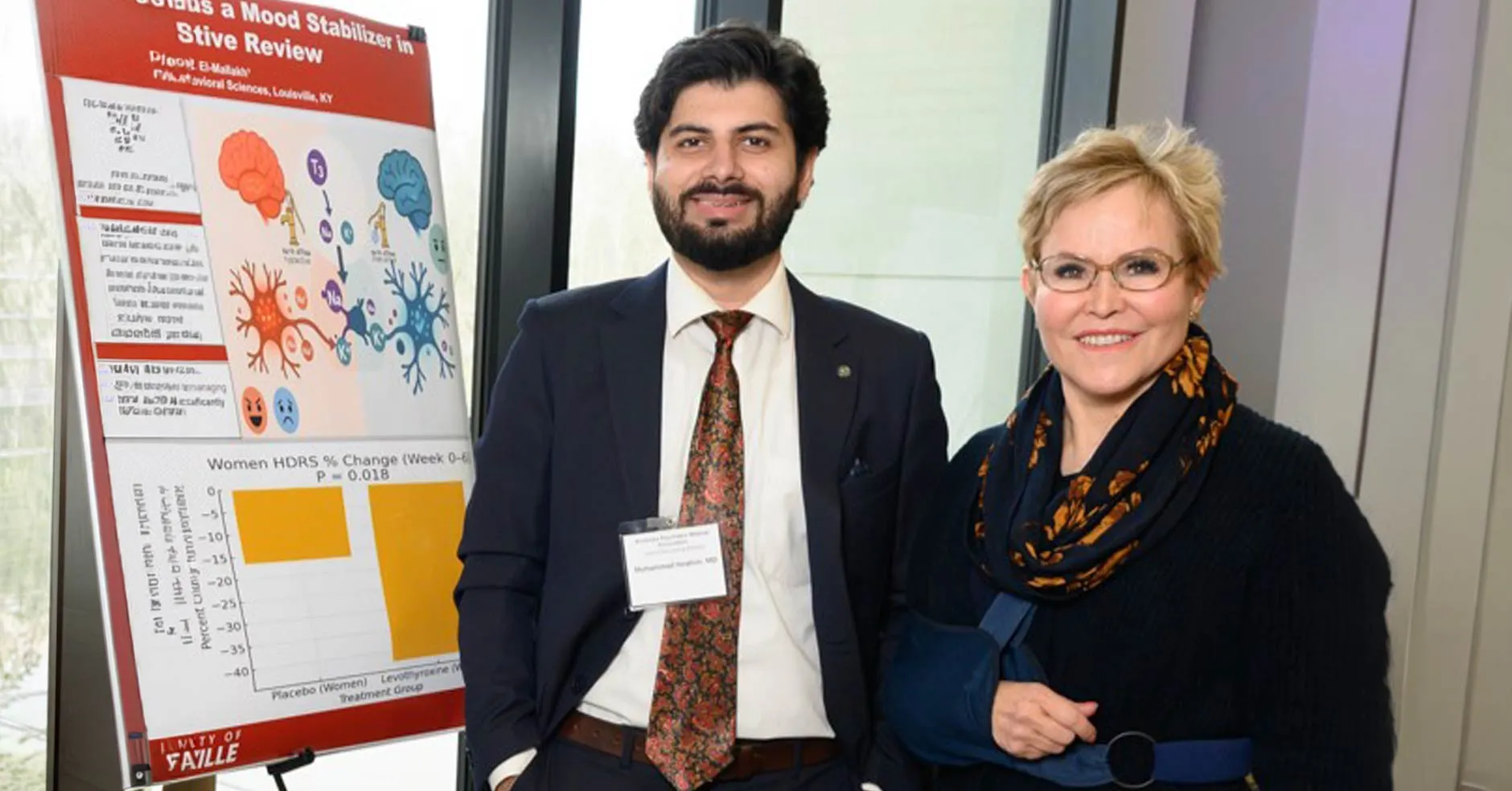
A conversation with Dr. Muhammad Ibrahim pointed to a different kind of clinical shift that moves beyond managing symptoms to targeting underlying mechanisms of bipolar disorder.
Rather than focusing on bipolar symptoms alone, Ibrahim aims to identify and address a potential biological driver of mood instability. His work centers on elevated intracellular sodium levels, a pattern that appears to contribute to both manic and depressive states.
By using thyroid hormone to help regulate this imbalance, Ibrahim’s approach may offer a more direct path to stabilizing mood.
Rethinking BMI
Dr. Zubi Sulemani expressed a concern in the context of diagnosis. She pointed to HB 169, a bill currently before the Kentucky legislature, which challenges the long-standing reliance on BMI as a primary indicator of eating disorders.
BMI has traditionally been used as a quick screening tool, but that simplicity can come at a cost. “Too many individuals with clinically significant eating disorders are overlooked because their BMI falls within a ‘normal’ range,” she explained.
Other patients with higher BMIs may be assumed to be unhealthy or advised that weight loss will resolve complex medical concerns when that may not be the case. Sulemani said the goal is not to eliminate BMI but to move it out of its role as a primary indicator. “A more accurate diagnosis integrates behavior, psychological factors, physical markers, and day-to-day functioning.”
Where Better Care Begins
My takeaway was the gap isn’t just in knowledge — it’s in translation. Whether you’re a clinician, a system leader, or someone navigating care yourself, the question becomes less about what should be done and more about what actually works.
That’s where better outcomes begin, and it’s where better conversations between patients, providers, and systems can start to close the gap.