
A new service line intends to improve treatment and prevention of chronic diseases
HAZARD Allie Davidson, APRN, feels blessed to work in her hometown of Hazard, Kentucky, as a Lifestyle Medicine service provider with Appalachian Regional Healthcare (ARH). Lifestyle Medicine treats and prevents chronic disease in patients by addressing lifestyle factors that may contribute to them.
Davidson knew from the time she entered college that she wanted to work in healthcare. “I wanted to be able to take care of people. I had multiple people in our community that I saw throughout my childhood as I was growing up that really influenced me to want to provide care back to our communities, just like they did for me,” she says.
After graduating from Hazard High School, Davidson earned her nursing degree from the University of Kentucky and her Master of Nursing from Southern Indiana University. In 2018, she and her husband, John Davidson, a physician assistant with ARH, decided they wanted to move home to Hazard to be closer to friends and family.
Davidson began her career with ARH in family medicine and infectious disease and worked in orthopedics for two years before joining the Lifestyle Medicine program early in 2026.
When ARH began discussing lifestyle medicine as its own service line in 2025, Davidson was all in. “I truly felt like lifestyle medicine is one of the best ways to make a significant change in the lives of our patients, our community, and our employees,” she says. Davidson and her team treat patients who are already sick, “but we want to take care of them when they’re healthy, so we can prevent them from getting sick.”
What Is Lifestyle Medicine?
Announcing the new program in early 2026, ARH said, “Lifestyle Medicine is a patient-centered, evidence-based program designed to help individuals build sustainable, healthy habits that can prevent, manage, or even reverse chronic health conditions.”
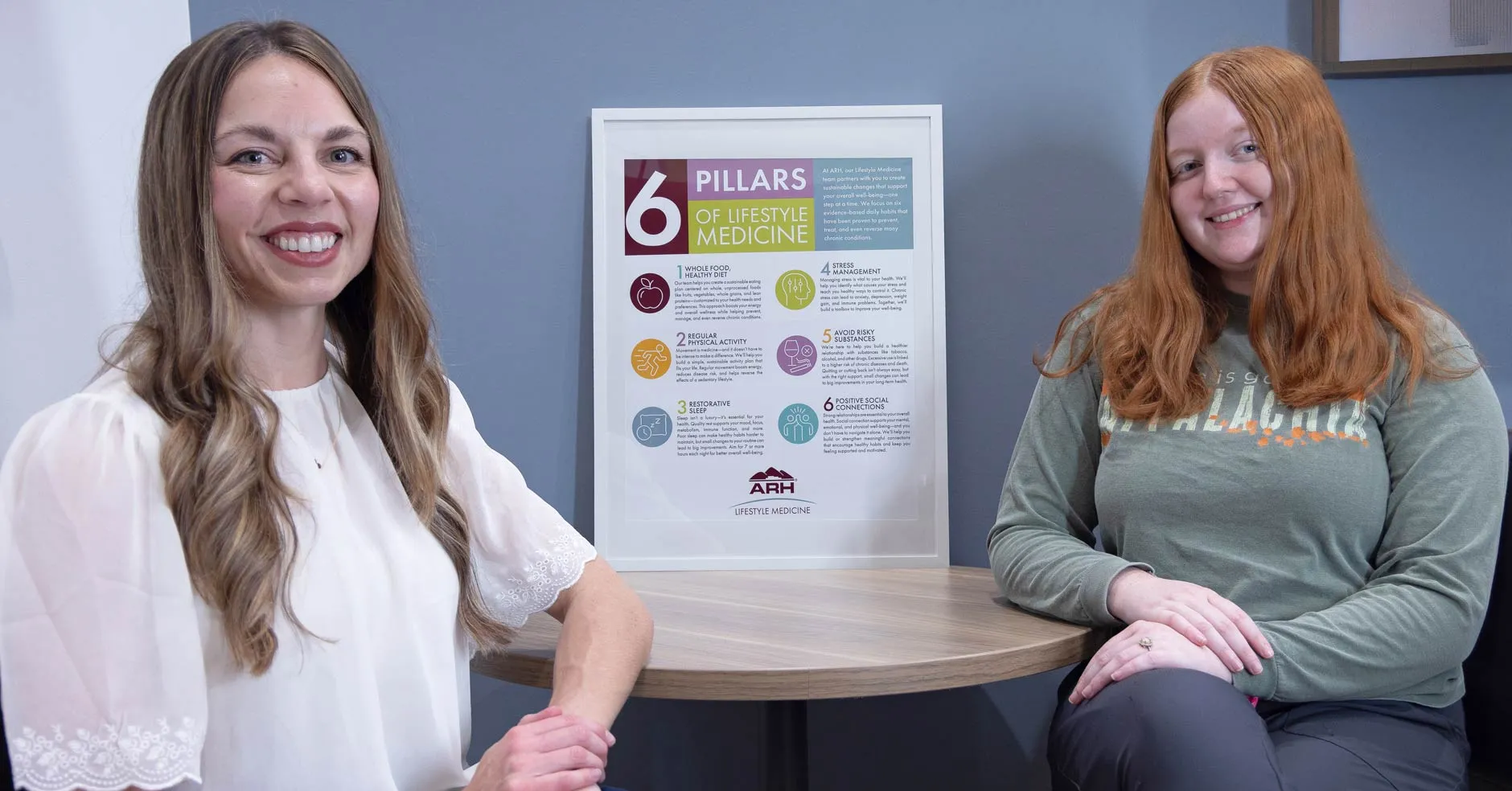
The program focuses on six core pillars: nutrition, physical activity, stress management, sleep, avoidance of risky substances, and positive social connections.
Davidson sees male and female patients from early adulthood through their mid-80s. In addition to serving as the Lifestyle Medicine provider, she is also the clinical service line director, meaning her average work week can vary quite a bit.
Everyone Has the Opportunity to Make Lifestyle Changes
Davidson spends extended time with patients at their first visit. She explains, “I learn about their past medical history, every detail, what they eat during the day, how they move their body, sleep, how they manage their stress, as well as other contributing factors that make up the Six Pillars of Lifestyle Medicine. All these factors play a role in the other. We find ways within those six pillars to improve and reach that person’s individual health goal.”
Kentucky has higher than average rates of heart disease, cancer, and diabetes. These chronic conditions are associated with lifestyle factors like an unhealthy diet, lack of exercise, and smoking. Davidson sees these comorbidities in her practice. “When patients come in, we discuss their readiness to change, to prevent worsening of their poor health condition, and even sometimes to reverse that condition. That’s our long-term goal, to improve their longevity,” she says.
Davidson emphasizes, “Everyone has the opportunity to make lifestyle changes, no matter their comorbidities or past medical history.”
Educating the Community on Lifestyle Medicine
In addition to clinical days where she sees patients, Davidson also participates in many community events, speaking engagements, and educational opportunities. She works with the ARH community development team on employee wellness to educate not only employees but community members on Lifestyle Medicine benefits.
Recently, she collaborated with the employee wellness team to provide a class on healthy eating by cooking a healthy lunch recipe.
The goal is to expand awareness of the Lifestyle Medicine service line across the ARH system. “I am really trying to educate and expand the knowledge to everyone in our population about lifestyle medicine,” she says.
“We want to be ‘behavior change specialists’ is a great way to put it. We want to use those evidence-based lifestyle changes to create lifelong changes for our patients. The more I can educate our community, our medical community, and our providers, I think it becomes very clear what our main goal is,” she says.
Davidson has received positive feedback from her patients and the community about the role lifestyle medicine can play in managing their health. Even if some people are skeptical at first, once they understand that they are looking at small changes to make in their daily lives that can really make a big difference in their health outcomes, they are eager to move forward.
When patients come in for follow-ups and report they’ve lowered their A1C or they have more energy or they’re sleeping better, “They’re just so excited that they did that, they did the work. They’re the driver. I’m just in the passenger seat helping them along. It fills my cup when a patient comes back in and tells me that they feel better,” Davidson says.
Don’t Underestimate the Importance of Sleep
Davidson says sleep is the pillar of lifestyle medicine that is most overlooked, and it’s often the first issue she addresses with her patients. They discuss their current sleep habits, what time they wake up, go to bed, and eat dinner, and find ways for patients to improve their restorative sleep.
“Poor sleep is associated with multiple increased health risks such as obesity, type 2 diabetes, cardiovascular risk, impaired memory, and depression. So when we don’t sleep well and take care of ourselves, we don’t have the energy to exercise. We don’t have the energy to cook healthy meals or spend quality time with family and friends. It affects our mood and our day-to-day decision-making,” she says.
It’s All About Community
Davidson feels incredibly lucky to live, raise her family, and serve her community in Perry County. “We are such a tight-knit community. I’ve had so many people in this area influence me and take care of me, from previous pediatricians and nurses to teachers that have influenced my life. I want to give back to this community. I just want the best outcome for all the people that have helped me along the way.”