
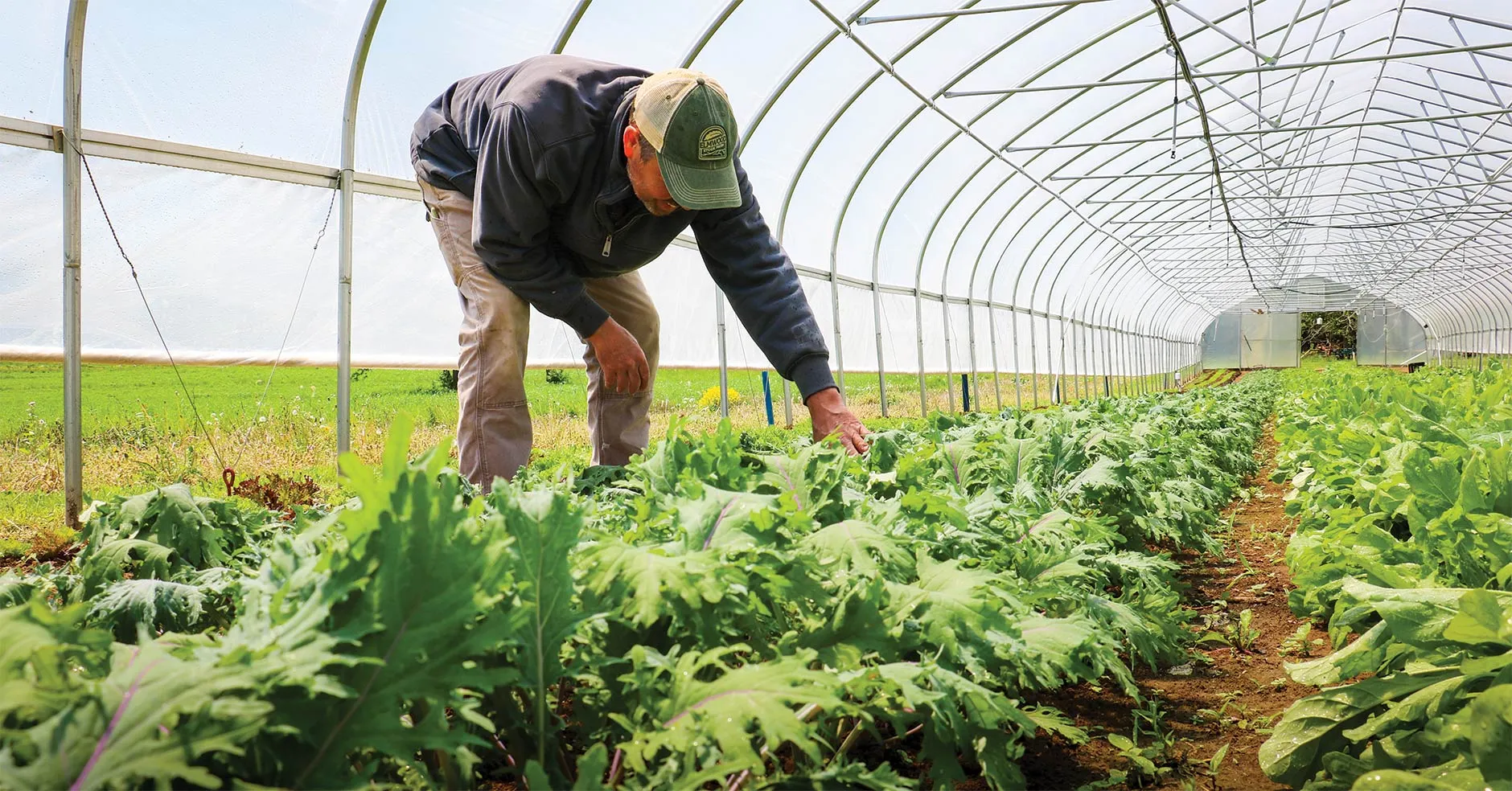
Organic farming and farm-to-table programs continue to grow in Kentucky
GEORGETOWN While Elmwood Stock Farm is endowed with some magnificent bur and chinquapin oak trees that anchor us to the earth, the OAK I reference here is an acronym for the Organic Association of Kentucky, founded in 2009.
The founding members felt the good karma when pitching names for the yet-to-be-formed association of Kentucky farmers helping each other be better organic farmers. Bylaws were drawn up, lone wolf university folks snuck us out some information, and pretty soon, we had a critical mass. The acorn had taken root.
Recently, Kentucky State University’s Harold R. Benson Research and Demonstration Farm in Frankfort was overrun with hundreds of organic farmers, organic eaters, and university folks who wanted to connect, be informed, be encouraged, and be inspired. This was the 15th year!
In the early days, we were appointing whoever missed the meeting to be the Secretary or Treasurer. But also in those days, we literally passed the plate (okay, it was a hat) to put on a big spring meeting, not only to learn, but to laugh, swap lies, break bread, and generally recharge our agrarian batteries ahead of another growing season.
People sometimes forget that farming can be an isolating profession if you’re not careful. It’s not easy for each farmer to do our own thing, find our own customers, figure out how to get the work done, and pay all the bills. There is comfort in numbers. Our first attempt at a large gathering was energized by reach-for-the-sky optimism that others would follow.
They have, and the OAK conference has gotten bigger and better every year.
The OAK Has Grown
As organizers, we got our 501(c)(3) not-for-profit business status lined out, started to write grant requests, and sought private donations to build programs designed to fundamentally change organic food production in the Commonwealth.
We developed consumer-facing educational programming along with resources for conventional farmers to help them transition to organic systems of growing.
Thanks to a significant commitment from the Owsley Brown Foundation, the association was able to hire an awesome full-time executive director, Brooke Gentile, who continues to lead the organization in setting deep roots throughout the community while spreading a canopy to care for us all. Today, OAK has a dozen full-time employees, puts out newsletters, and offers mentorship programs, consultation services, conservation initiatives, and more.
One of OAK’s signature projects is the organic transition trainer program. Through this program, a trained individual will come visit a farm to address the regulatory hurdles and share resources with farmers on how to get started. The trainer will continue communications with the farmer throughout the growing season and gladly usher them through the organic certification process.
Any and all farmers looking to manage their land in a more environmentally conscious manner are welcomed!
Sustainable Farming Means Sharing & Caring
The beauty of being a part of the sustainable farming movement is the sharing and caring we have for each other. In a different industry, it might be counterintuitive, but we know our business will be stronger if there are more certified organic farmers, even if they are growing the same things we grow.
New farmers bring new customers, and education spreads. We’re glad to share what we’ve learned over the years, and we also know that we will learn something from folks we meet at the OAK conference that will benefit us.
OAK has taken the leadership role in developing the Kentucky Farm Share Coalition (KYFSC). This workplace wellness program incentivizes businesses and agencies to partner with local farm CSA programs for the benefit of their employees.
It’s an attractive opportunity for employers for several reasons. First, it’s a unique employee perk that can distinguish one workplace from others. Secondly, it helps the bottom line — supporting their employees’ healthy diets means they spend more time at work and less time at the doctor’s office.
Research from UK has shown that employees spend less money on doctor visits and pharmaceuticals after having participated in an organic CSA program. If you think your medical practice or business would benefit from a program like this, let us know and we will gladly set up a meeting.
My brother-in-law and farming partner John Bell and I were both on the agenda for this year’s OAK conference held in February 2026. John was on the farmer panel and shared his grazing plan for 100% grass-fed cattle. I, along with Dr. Tamara Horn Potter, shared the benefits of beekeeping on an organic farm.
Dozens of other farmers shared what they know with their fellow farmers or farmers-to-be. High caliber speakers came in from around the country, and the trade show displayed the newest technologies available, while various “ologists” and extension agents made sure we were scientifically sound.
Laughter was heard around the tables as people came together over farm-to-table meals. Seeing how far OAK has come in a few short years is encouraging to the soul. Hanging out, sharing stories, and learning a thing or two always revs me up for the coming year.
Please reach out to me if you’re interested.
Mac Stone was executive marketing director for the Kentucky Department of Agriculture and chair of the U.S. Department of Agriculture National Organic Standards Board. He can be reached at macstone719@gmail.com