
Primary HPV testing is now preferred, and self-collected sampling offers a new pathway to reach under-screened populations—particularly in rural Kentucky.
FRANKFORT — Cervical cancer screening is undergoing an important transition, with updated recommendations emphasizing primary human papillomavirus (HPV) testing and introducing self-collected HPV sampling as an option in select settings. For Kentucky clinicians, these changes are particularly relevant given persistent screening gaps and the disproportionate burden of cervical cancer across rural and Appalachian communities.
Several professional organizations have updated their guidance to prioritize HPV-based screening. The Health Resources and Services Administration (HRSA) and the American College of Obstetricians and Gynecologists (ACOG) recommend cervical cytology (Pap testing) every three years for individuals ages 21–29. For those ages 30–65, primary high-risk HPV (hrHPV) testing every five years is now the preferred screening strategy (Health Resources and Services Administration [HRSA], 2026). Acceptable alternatives include co-testing with cytology and hrHPV testing every five years or cytology alone every three years.
Updated guidance also emphasizes the importance of completing the entire screening process, including timely diagnostic follow-up such as colposcopy when indicated (Screening for Cervical Cancer, 2026). Most health insurance plans are expected to incorporate these recommendations beginning in 2027.
The American Cancer Society (ACS) recommendations differ slightly, supporting primary HPV testing beginning at age 25 and continuing through age 65 at five-year intervals when results are negative (American Cancer Society [ACS], 2025). Cytology-based screening every three years remains an acceptable alternative when HPV testing is not available.
Why This Matters in Kentucky
Despite significant national declines in cervical cancer incidence and mortality, Kentucky continues to experience a disproportionate burden of disease. Clinicians practicing throughout the Commonwealth—particularly in rural and Appalachian regions—frequently encounter patients with lower screening adherence, barriers to preventive care, and increased likelihood of late-stage diagnosis.
Multiple factors contribute to these disparities, including transportation limitations, shortages of women’s health providers, socio-economic barriers, and lower HPV vaccination uptake in some communities (Hudson et al., 2024). Rural populations also face challenges accessing specialty services such as colposcopy and gynecologic oncology care. Behavioral risk factors, including higher smoking prevalence in certain regions, may further increase cervical cancer risk and worsen outcomes (Amboree et al., 2024).
Self-Collected HPV Testing: What Clinicians Should Know
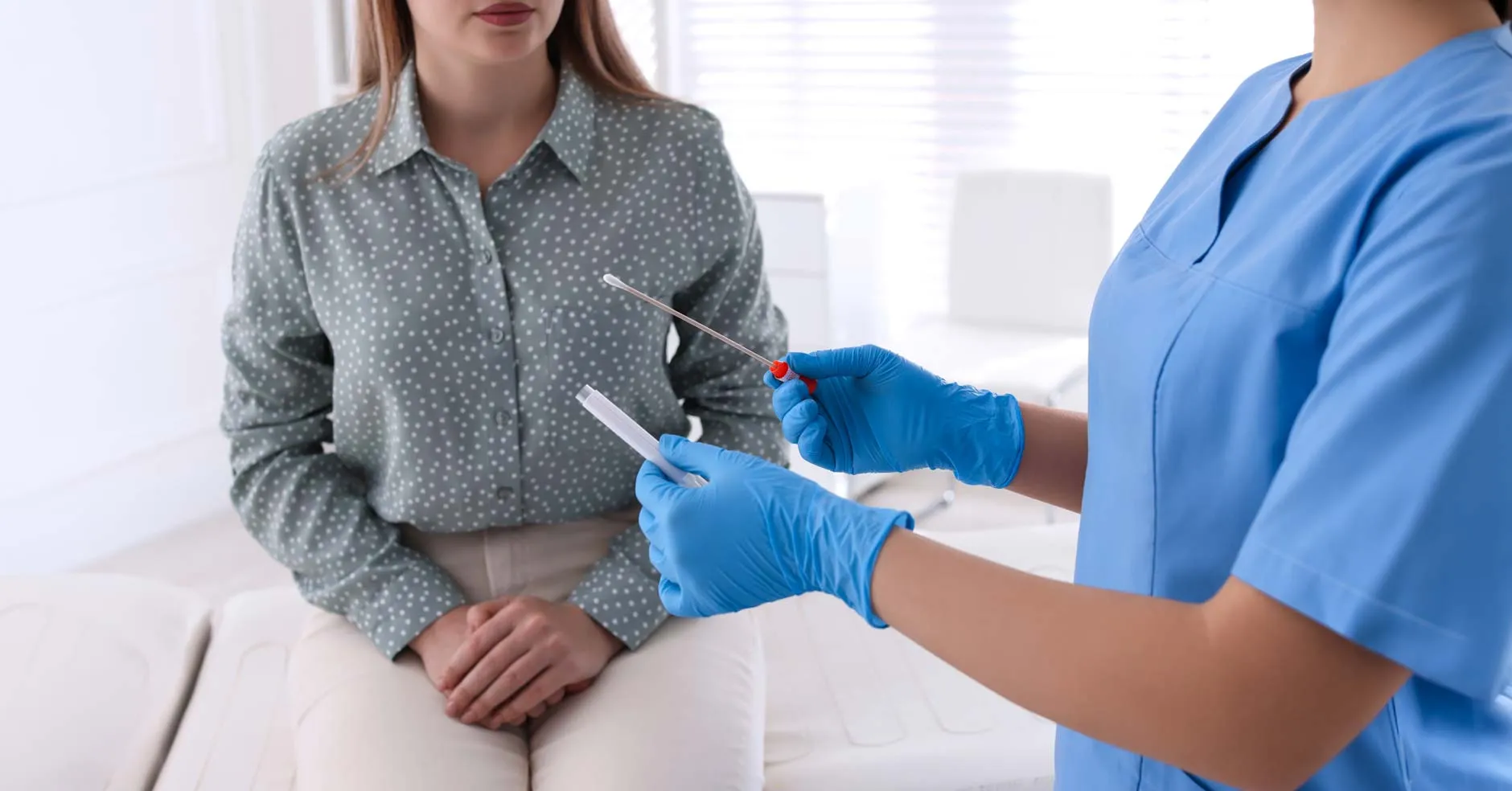
One of the most notable developments in updated screening guidance is the inclusion of self-collected HPV testing as a screening option. Patients may collect a vaginal sample using a swab-based kit either at home or in a healthcare setting, with testing subsequently performed using validated molecular assays (HRSA, 2026).
Studies demonstrate strong concordance between self-collected and clinician-collected samples, particularly when polymerase chain reaction (PCR)-based assays are used (HRSA, 2026). However, clinicians should recognize that self-collected testing detects high-risk HPV only and does not include cytology.
Equally important, a positive HPV result still requires clinician-directed follow-up, including pelvic examination, cervical cytology, colposcopy, or additional diagnostic evaluation depending on the clinical scenario.
In practice, self-collection should be viewed as an entry point into the screening continuum—not a replacement for in-person care.
Where Self-Collection May Fit in Practice
Self-collected HPV testing may be especially useful for patients who remain disconnected from traditional screening pathways.
Self-collected HPV testing may be particularly useful for:
- Patients overdue for screening or never screened.
- Individuals facing transportation or access barriers.
- Patients who decline pelvic exams.
For many Kentucky clinicians, self-collection may offer a practical opportunity to engage patients who otherwise might forgo screening entirely.
However, self-collected testing is not appropriate for all populations. Individuals at higher risk—including those with prior cervical cancer, high-grade cervical lesions, immunosuppression, or abnormal prior screening results requiring surveillance—should continue clinician-based screening and follow established management guidelines (U.S. Preventive Services Task Force [USPSTF], 2026).
Implementation Considerations
Successful implementation of self-collected HPV testing depends not only on test availability, but also on the systems supporting follow-up care. Practices considering adoption should prioritize patient education, care coordination, and reliable referral pathways.
Patients must receive clear instructions regarding specimen collection, interpretation of results, and the importance of completing follow-up evaluation when indicated. Partnerships with local health departments, federally qualified health centers, and regional referral networks may help strengthen continuity of care in underserved areas.
Timely access to colposcopy and diagnostic services is equally important. In regions with limited specialty care, delays in follow-up could offset gains achieved through expanded screening access.
Self-collection expands the screening toolkit—but its impact ultimately depends on what happens after the test.
The Opportunity Ahead
The movement toward primary HPV testing and self-collected screening reflects a broader shift toward patient-centered and decentralized care models. For Kentucky clinicians, these updates provide an opportunity to improve screening uptake among populations historically affected by healthcare access barriers and disparities.
When paired with strong follow-up infrastructure, self-collected HPV testing has the potential to improve screening adherence, support earlier detection and reduce cervical cancer disparities across the Commonwealth.
Clinical Pearls
- Primary hrHPV testing every five years is now the preferred screening strategy for many patients ages 30–65 (HRSA, 2026).
- Self-collected HPV testing is an option in select settings.
- Self-collection may help engage under-screened and hard-to-reach populations.
- Positive HPV results still require clinician-directed follow-up and diagnostic evaluation.
- Higher-risk patients should continue clinician-based screening and surveillance.
Lori Caloia, MD, MPH, is the deputy commissioner for clinical affairs at the Kentucky Department for Public Health. She can be reached at 502.564.3970 and lori.caloia@ky.gov