CommonSpirit – Saint Joseph Hospital – Cancer Center – Bardstown combines new technologies and partnerships to provide care closer to home.
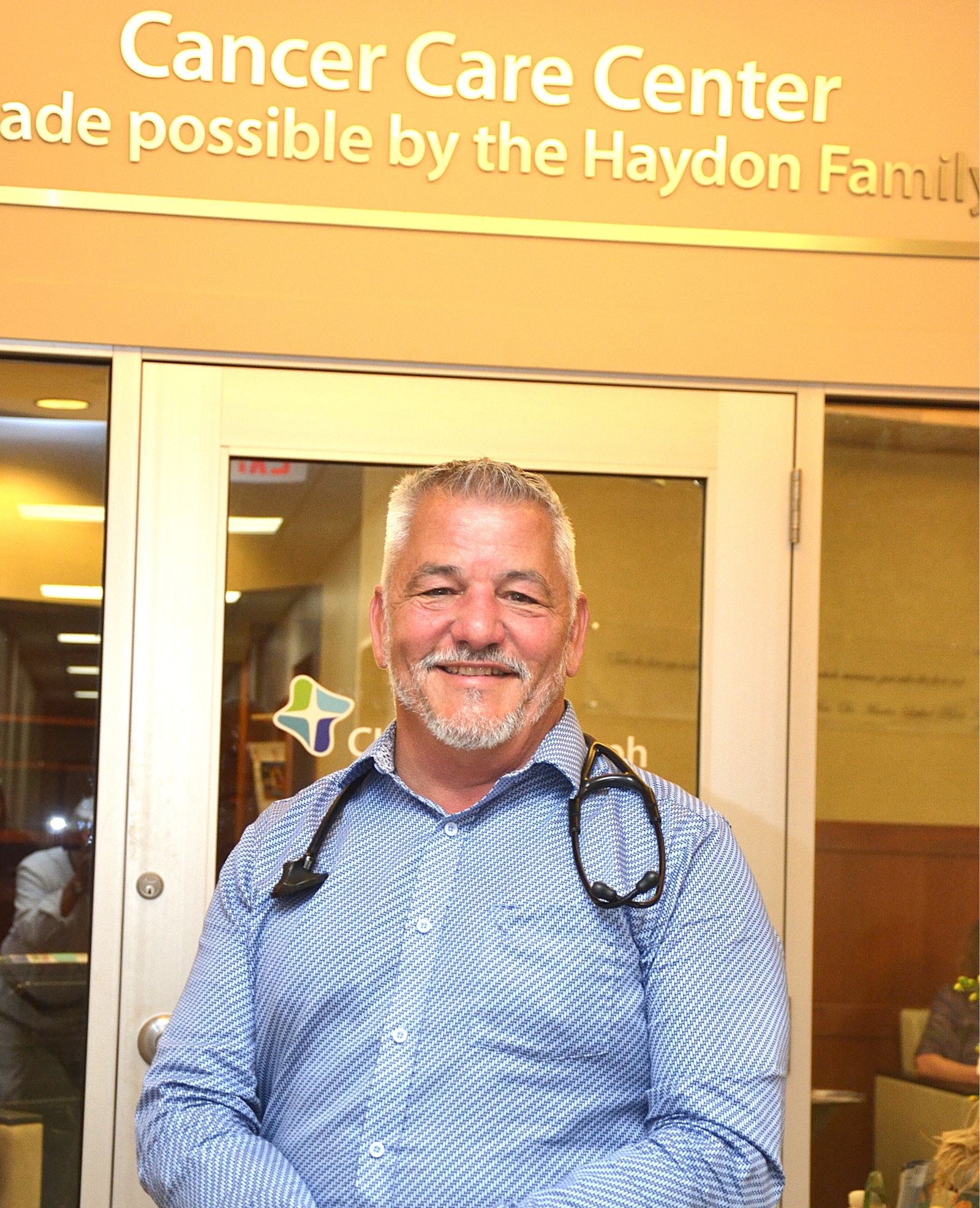
BARDSTOWN — As Bob Dylan sang, “The times, they are a-changin.” Dylan’s words ring especially true for oncology care at CommonSpirit – Cancer Center – Bardstown. Even though Bardstown is a more rural area than Louisville or Lexington, Patrick Williams, MD, medical oncologist, is committed to bridging the gap, giving patients access to the same care and advanced treatments that folks in the bigger cities have. As he says, “We’re always looking for that one more thing we can do.”
Expanding Treatments
Williams speaks enthusiastically about the services the cancer center has added in the last several years, including bone marrow biopsies, a walk-in clinic, and BiTE therapy, which is a medication primarily used in hematologic malignancies that teaches an antibody to go after specific cancer cells. But it doesn’t just attack the cancer cell directly. As Williams explains, “It’s very cutting edge because it aims at a cancer cell and stimulates the immune system at the same time. Patients who used to have to travel to larger cities to get this treatment can now access it closer to home.”
The cancer center has streamlined how patients enter the clinic, providing same-day appointments. With increased opportunities on-site and an ability to consult remotely with specialists, patients are spared a lot of time and travel. “We have new capabilities that allow us to match anybody else’s level of care. The only things we can’t do are transplants and surgical oncology,” says Williams.
Williams is also proud of the 12 private infusion treatment suites they provide for patients. “It used to be a room where people would sit in chairs and stare at each other while they’re getting their chemotherapy. Nobody does that here, so it’s really neat,” he says.
Partnerships Are Beneficial for Patients and Providers
Williams has fostered existing relationships with local oncologists and academic cancer centers in the region, as well as within CommonSpirit’s national oncology service line, to improve patient access to clinical trials. “Patients who have failed therapies for hematologic malignancies like myeloma and lymphoma are allowed front-door access to their clinical trials with no wait period because we’ve built these relationships,” he says.
“In the past, these trials were only available at larger hospitals. It’s really unusual to have the degree of access we have for such a small clinic,” says Williams.
In addition, he makes an effort to build relationships and collaborate with other physicians. He sees this as a return to “old school” medicine, when clinicians partnered more closely on patient care. These relationships are crucial for the patients and their physicians.
Radiation Oncology Is Busy and Getting Busier
Even without the pursuit of new therapies to offer patients, Williams and the infusion clinic are busy with radiation, chemotherapy, and biologic therapies. Patient volume has increased substantially over the last several years as has chemotherapy administration and the complexity of disease.
The Cancer Center at Bardstown recently added a full-time radiation oncologist, Alex Williams, MD, and will likely need to add another specialist in the next few years.
Williams suggests the future might see more single disease specialists rather than general oncologists. He says, “We all read the literature and do our best, but having subspecialty care will help our patients. We want them to feel as though they are getting the absolute best care with the available technology and what’s the newest in patient care.”
The Biggest Driver of Change Is Patient Care
In addition to the increase in patient volume and new therapies, Williams says the biggest driver of change at the center is “the global desire to meet the standard that any major cancer center would have, as best we can.”
Williams and his staff are highly motivated and knowledgeable about the availability of cancer capabilities. They want to provide the highest standard of care for people in Bardstown and the surrounding area without making them travel for treatment.
“If you have confidence in your local cancer center to provide care, then people are more likely to come here instead of having to travel. What we sometimes fail to remember is that a 45-minute drive, one-way, means a two hour round trip, plus time spent waiting in the office. For somebody who has a deadly cancer, that’s almost an entire day of their life on the road,” he says.
Though care options are converging between rural and metropolitan hospitals, Williams understands that rural areas will never be able to provide all the treatments available at a larger hospital. “There are some things we can’t do just because it’s technically impossible in a small hospital like ours, but there’s a lot of things we can do with the right training and the right staff, and we’ve got the motivation to do it,” he says.
The Future of Cancer Treatment
As proud as Williams is of the services already provided as part of the greater CommonSpirit Health network, he is just as optimistic about the future of cancer treatment at the clinic.
CAR T-cell therapy, a treatment in which a patient’s immune cells are removed, reprogrammed to attack cancer cells, and then put back into the patient, is expensive and requires capital investments. Williams hopes that once it becomes a bit more accessible, maybe even in the next couple of years, they can offer it in Bardstown. This type of cellular therapy would provide another treatment option for those who previously might have been told they required a transplant.
A new drug at the forefront of pancreatic cancer treatment will be available at the clinic soon. He explains, “We will probably be first in line for this treatment, not because it comes to everybody, but because we’re prepared from a vendor perspective to receive and administer it. We have lots of pancreatic cancer patients who will need a third-line therapy, which is very rare.”
Preemptive oncology involves looking at somebody who “might have a gene profile indicating they’re high risk. This is not just somebody who has what we call germline or genetic mutations from moms and dads, but other somatic mutations that can be identified earlier. Now we’re starting to screen them,” says Williams.
Williams envisions a clinic that would offer screenings to anyone interested in obtaining their risk profile for certain cancers. “The patient could potentially offset that risk of cancer or perhaps catch it very early, before standard screening is recommended.”
Compassionate Use Therapy, which Williams has had some success with, is used in patients who have diseases that are so rare they have little, if any, treatments. It takes an established therapy for another kind of cancer, checks for certain similarities in properties to the rare cancer, and if they align, can be used as a clinical trial of one patient to treat the person with the rare cancer. It’s off label, but very specifically geared toward that one person.
Bardstown Is Home
While Williams strives to eliminate any disparities in care between larger cities and small towns, there are benefits to living in a rural area. He and his staff know many of the patients they treat. They are friends, neighbors, relatives. Williams’ wife, Stacy, was born in Bardstown, so it’s special to them. It’s important to him for the community to receive the best care possible without having to leave the place they all call home.