

LEXINGTON — Most people in Kentucky don’t need a statistic to know that heart disease is a problem. They’ve lived it.
It’s the heart attack that didn’t wait for retirement. The stroke that turned a normal morning into a life-changing moment. The blood pressure medication that quietly became part of a daily routine. In the Commonwealth, cardiovascular disease isn’t something we talk about in theory; it’s something families carry with them, often for generations.
I am a cardiovascular scientist, and I do my work in Kentucky. That sometimes surprises people. When many imagine biomedical research, they picture it happening only on the coasts, in places far removed from everyday life. They imagine Kentucky as a place where heart disease is treated in clinics, not studied in laboratories. But that assumption misses something essential. Kentucky isn’t just a place where cardiovascular disease is common, it is a place where cardiovascular discovery is urgent, and where it can be uniquely impactful.
Heart disease remains the leading cause of death in Kentucky, with stroke close behind. The risk factors that drive these outcomes—high blood pressure, obesity, physical inactivity, smoking—are widespread. But they are not simply the result of individual choices. They reflect deeper realities: access to care, education, economic stress, food environments, and long-standing inequities. Behind every number is a family changed overnight, a community strained by preventable illness, and a health system asked to do more with less.
This is why cardiovascular research in Kentucky is not optional. It is a form of service. If we can make progress here, where the burden is high and resources can be constrained, we can generate insights and solutions that travel far beyond state lines. Kentucky is not just a place that needs answers; it is a place that can help lead them.

Platelets: The Active Messengers
My own scientific work sits at the intersection of basic biology and real disease. I study how platelets, cells most people associate only with clotting, communicate with blood vessels and immune cells in ways that shape cardiovascular health. Platelets are often thought of as passive “band-aids,” but in reality, they are active messengers. Under stress, they release signals that can drive inflammation and changes in the vessel wall. That biology matters for common conditions like heart attacks and strokes, but also for less well-known and often deadly events such as aortic aneurysms.
At its core, my work is about asking practical questions. What happens early in disease? What warning signs appear before symptoms? What parts of this biology can be measured, targeted, or changed safely? How do we move from discovery to prevention, not just treatment?
This is what people mean when they talk about “bench to bedside.” It is not a slogan; it’s a responsibility to ask whether today’s discovery will prevent tomorrow’s emergency. We use experimental models and advanced tools to understand mechanisms, but we never lose sight of the goal: fewer emergencies, fewer disabilities, and more years of healthy life.
Working at a public university like the University of Kentucky (UK) shapes how you think about impact. The people who stand to benefit from our science are not an abstract population. They are our neighbors, the patients seen in Kentucky clinics, the families across the Commonwealth, and the communities reached through UK’s growing clinical and research partnerships.
From Labs to Communities
Science does not live only in laboratories. It lives in communities. That commitment is reflected not only in research, but in hands-on community impact across Kentucky. Organizations like the American Heart Association (AHA) help bridge the gap between science and local communities. Through local AHA initiatives, local fire departments in Lexington and Louisville are partnering to improve bystander CPR training, increasing the chances that someone survives a sudden cardiac arrest before help arrives.
Programs like Libraries with Heart place blood pressure cuffs in rural libraries, making prevention accessible in places where healthcare access can be limited. Statewide CPR education and emergency cardiovascular care programs reinforce a simple truth: Saving lives begins long before someone reaches a hospital.
Being a scientist in Kentucky also means you are constantly reminded who you are working for. The patients are not faceless data points. They are people you see at the grocery store, at church, at the gym, or in your own family. That proximity creates a sense of responsibility that is hard to describe unless you live it. When you study cardiovascular disease here, urgency is built into the job.
Why Kentucky?
One of the reasons I chose to train and build my career at UK is the culture of mentorship. I did not arrive as a finished product. I arrived as a trainee, curious, driven, and still learning how to ask the right questions. What shaped me were mentors who invested deeply, not only in my experiments, but in my growth as a scientist and communicator. They taught rigor, integrity, collaboration, and the importance of keeping patients and communities at the center of discovery.
That mentorship culture is one of UK’s greatest strengths, and it often goes unseen. It is how universities like UK develop scientists who can operate locally and nationally at the same time, people who understand the realities of Kentucky while contributing meaningfully to conversations that shape cardiovascular research across the country.
My work increasingly lives at that intersection. Alongside my research, I am involved nationally with the American Heart Association, including my role as an AHA science communicator. That role reflects something I believe deeply: Science that stays locked inside academic journals cannot reduce disease on its own.
The Role of the American Heart Association
The American Heart Association plays a critical role in turning science into action by bringing together researchers, clinicians, public health experts, and communities to set priorities, translate evidence into guidelines, and advance prevention. It supports research, educates the public, and works to ensure that advancements reach those who need them most. For states like Kentucky, where the cardiovascular burden is high, that work is not optional; it is essential.
As a science communicator, my responsibility is to bridge gaps, between scientists and clinicians, between research and real life, and between evidence and public understanding, especially in an era flooded with health misinformation that fuels confusion and skepticism. Importantly, this impact begins in our own communities.
Through local events such as the Heart Ball and other fundraising efforts, the American Heart Association raises resources that are reinvested directly into research. Those funds become competitive grants that support investigators like me, helping discoveries made in Kentucky laboratories move forward and translate into better cardiovascular care for Kentuckians.
I also see advocacy as part of my scientific duty. Not advocacy tied to politics, but advocacy for clarity, honesty, and evidence. Trust in science is built when scientists show up as people, when we explain not just what we know, but how we know it, and what we are still working to understand. It is built when we listen, not just speak. And it is built when communities see scientists who care enough to engage beyond the lab.
That is why being visible as a scientist in Kentucky matters to me. I want students, trainees, and everyday Kentuckians to see that science is not distant or elitist. It is a career built on persistence, failure, mentorship, and teamwork. It involves talking to physicians about real patients, thinking carefully about how discoveries move from bench to bedside, and asking whether our work truly improves health.
Science Is Not a Straight Line
Kentucky has everything it needs to lead in cardiovascular health: strong clinical systems, dedicated researchers, national partnerships, and communities that stand to benefit enormously from prevention and early intervention. What we need is sustained investment, in research, in mentorship, in communication, and in trust.
I am proud to do my science at the University of Kentucky. I am proud to represent Kentucky through national work with the American Heart Association. And I am motivated by a simple belief: Places carrying the greatest burden of cardiovascular disease can also be the places that generate the most meaningful solutions.
Advocacy also means showing what the life of a scientist really looks like. It is not a straight line. It includes failed experiments, rejected grants, long nights, and moments of doubt. But it is also filled with discovery, collaboration, mentorship, and the quiet satisfaction of knowing that today’s work might protect someone’s health years down the road.
When people see scientists as real people, neighbors, parents, mentors, it becomes easier to trust the process. Changing the story of heart disease in the Commonwealth will not happen overnight. It will not happen through a single discovery or policy. It will happen through sustained commitment, through education, prevention, mentorship, and honest dialogue.
If you are a clinician, I hope you see researchers as partners, not as people in a separate universe. Tell us what is failing in real practice. Tell us what your patients can’t access. Tell us what outcomes matter most. If you are a policymaker or community leader, I hope you view trust in science as infrastructure. The most elegant guideline means nothing if people don’t believe it, can’t afford it, or can’t reach it.
And if you are a student or trainee, especially in Kentucky, consider this a personal invitation. We need you.
Cardiovascular disease is the Commonwealth’s fight, and it will take a new generation of scientists, clinicians, educators, and communicators to win it.
I see my role as helping build those bridges, between science and society, between Kentucky and the nation, and ultimately between discovery and healthier lives, one experiment, one conversation, and one community at a time.
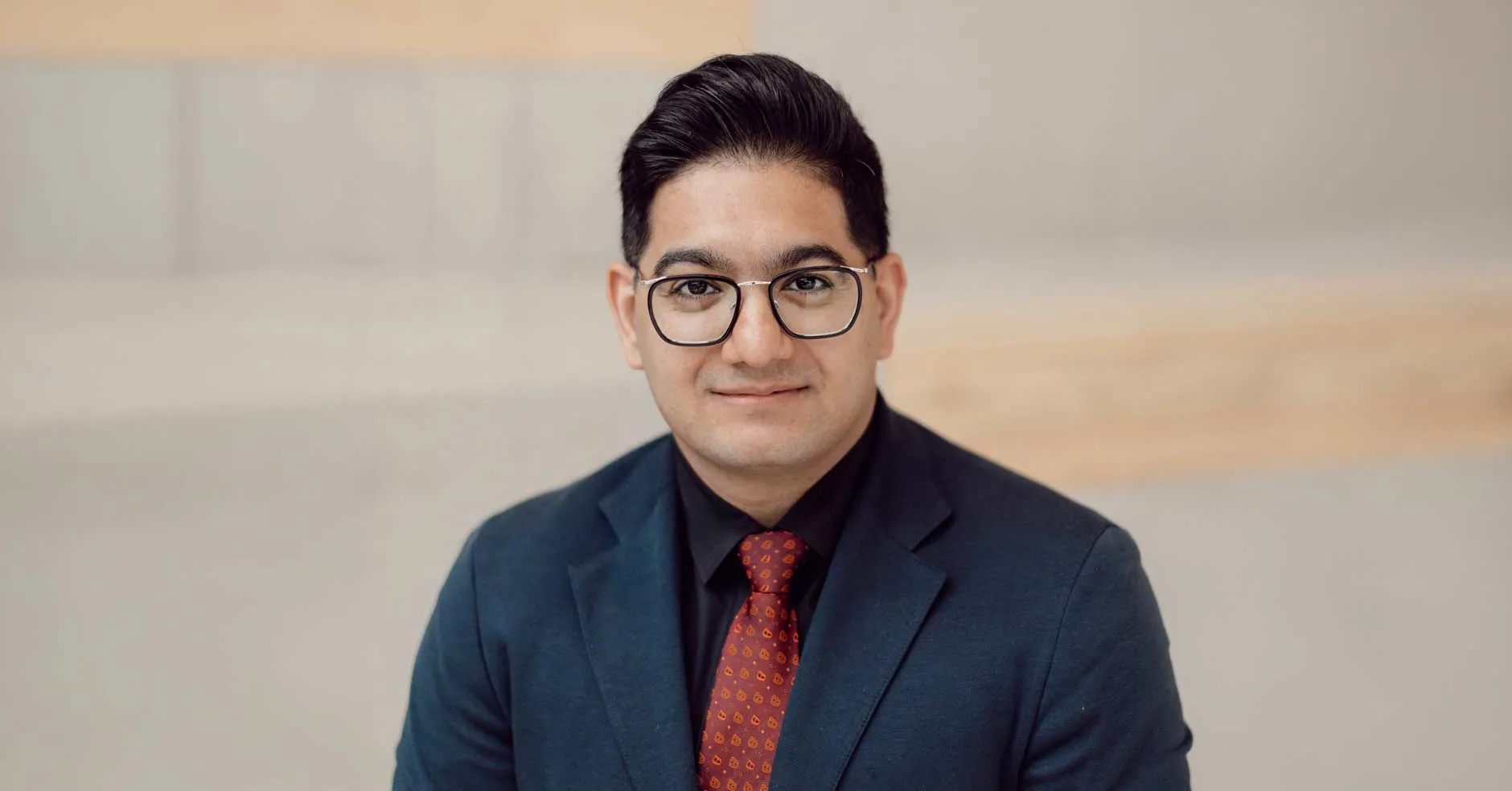
Shayan Mohammadmoradi is a senior post-doctoral fellow at the Saha Cardiovascular Research Center, University of Kentucky, and the lead science communicator of the American Heart Association. He can be reached at shayan.m.moradi@uky.edu