

LEXINGTON — There is a saying that goes, “A man who works with his hands is a laborer; a man who works with his hands and his brain is a craftsman; but a man who works with his hands, and his brain, and his heart is an artist.”
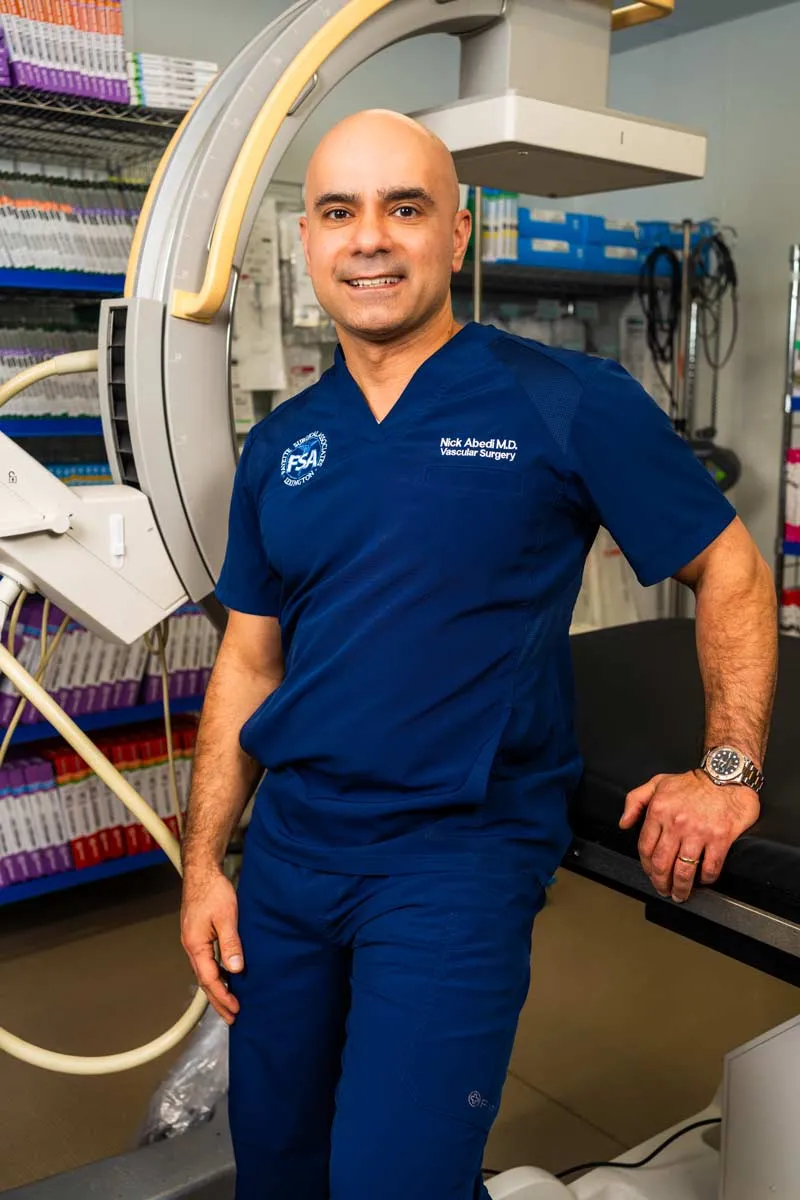
Five such men have recently come together at Fayette Surgical Associates (FSA), a full-service vascular surgical practice with three clinics, all equipped with vascular labs, a state-of-art vascular surgery center, and a prosthetics center. All are conveniently located in Lexington and Somerset, Kentucky. Much like the fingers on a hand, each of these five surgeons brings unique skills and assets, making the whole much greater than the sum of its parts.
Fayette Surgical Associates offers a full range of vascular surgery options including abdominal aortic aneurysm stenting (EVAR) and open repair; balloon angioplasty, stenting, and atherectomy of arterial lesions; operative bypass grafts and hybrid approaches; carotid artery stenting (TCAR); carotid endarterectomy; endovascular grafts and stents; mesenteric and renal artery interventions; and hemodialysis access.
FSA’s vascular surgery center performs peripheral arterial angiogram, atherectomy, angioplasty and stents; venogram and venous stenting; mesenteric artery angioplasty and stent; renal artery angioplasty and stent; dialysis access maintenance; IVC filter insertion and removal; port-a-cath placement and removal; permacath placement; endovenous ablation; microphlebectomy; chemical ablation of veins; and geniculate artery embolization.
FSA’s services also include cosmetically removing those varicose and spider veins.
The vascular lab department of FSA, led by medical director Igor Voskresensky, MD, RPVI, offers carotid artery duplex; upper extremity arterial and venous duplex; abdominal aortic duplex; mesenteric arterial duplex; renal artery duplex; lower extremity arterial and venous duplex; and dialysis access duplex.
“By some divine intervention, the five of us have come together,” says FSA’s president Nick Abedi, MD, FACS, RPVI. “We all come from different backgrounds, and we really complement each other well. We all have different skill sets. We don’t compete against each other. We’re always there supporting one another, which in a surgery practice, is unheard of.”
The Private Practice Decision
Fayette Surgical Associates is a division of United Surgical Associates, (USA), a private entity that was founded in 1986 to take care of patients by working with local hospitals.
From 2009 to 2020, Abedi was employed by Saint Joseph Health but worked in USA’s office, which included surgeons specializing in cardiothoracic, plastic, bariatric, and general surgeries.
“In 2019, most of the FSA members decided they were going to retire, so I had a tough choice,” Abedi says. “The employees whom I considered family members for all those years were either going to lose their jobs or I would have to leave my employment and take the lead and take over this private practice. And that’s what I decided to do.”
Abedi partnered with Voskresensky and Keith Menes, MD, to launch Fayette Surgical Associates. They purchased a building in 2019 and spent nine months renovating it before opening in April 2020, just as the pandemic hit. The pandemic resulted in lack of access to many necessary medical supplies and put on hold all non-urgent procedures. But, as the saying goes, necessity is the mother of invention.
For example, aortography with catheterization is generally performed by accessing the femoral artery, which can be high-risk for complications and painful. The challenge presented by the pandemic became an opportunity.
“Since I couldn’t get any IV sedatives, I had to make arterial catheterization as painless and as quick as possible for the patients to tolerate,” Abedi says. “I decided to see if we could access the small arteries around the ankle. It enabled me to use lidocaine to numb the insertion area with minimal sedation required. It’s more challenging to access, but not as painful for the patient, and a whole lot faster.”
It not only reduces pain, but with pedal access there is also less radiation exposure, less contrast used, and lower sedation requirements.
By changing the way the practice performed angiograms, the FSA surgeons were able to continue taking care of their patients during and beyond the pandemic. Abedi has since taught other vascular surgeons and cardiologists how to do the procedure via pedal access.
“When I was trained, it was thought that accessing the small arteries in the foot could possibly injure them and actually result in somebody losing their limb,” Abedi says. “But by using very small profile devices it can be done safely without vessel injury, and it has a much higher rate of successful intervention because you’re not running wires all the way from one extremity to the other.”
Abedi comes by his passion and skill for surgery naturally. He grew up in West Virginia. His father was a general surgeon, and his mother was an organic chemist. Abedi attended West Virginia University for both undergraduate and medical school. He fell in love with surgery and considered becoming a plastic surgeon before finding his calling as a vascular surgeon. He did his general surgery training at the University of Kentucky, with his first rotation being vascular surgery.
“I knew immediately, no matter how hard it was, I wanted to be a vascular surgeon,” Abedi says.
While he was certain about his career choice, little did Abedi know that he would end up in a practice with five like-minded vascular surgeons. Menes and Voskresensky, fellow founding partners of FSA, are still with the practice, which has since grown with the addition of Junior Univers, MD, RPVI, and Mark Iltis, DO.
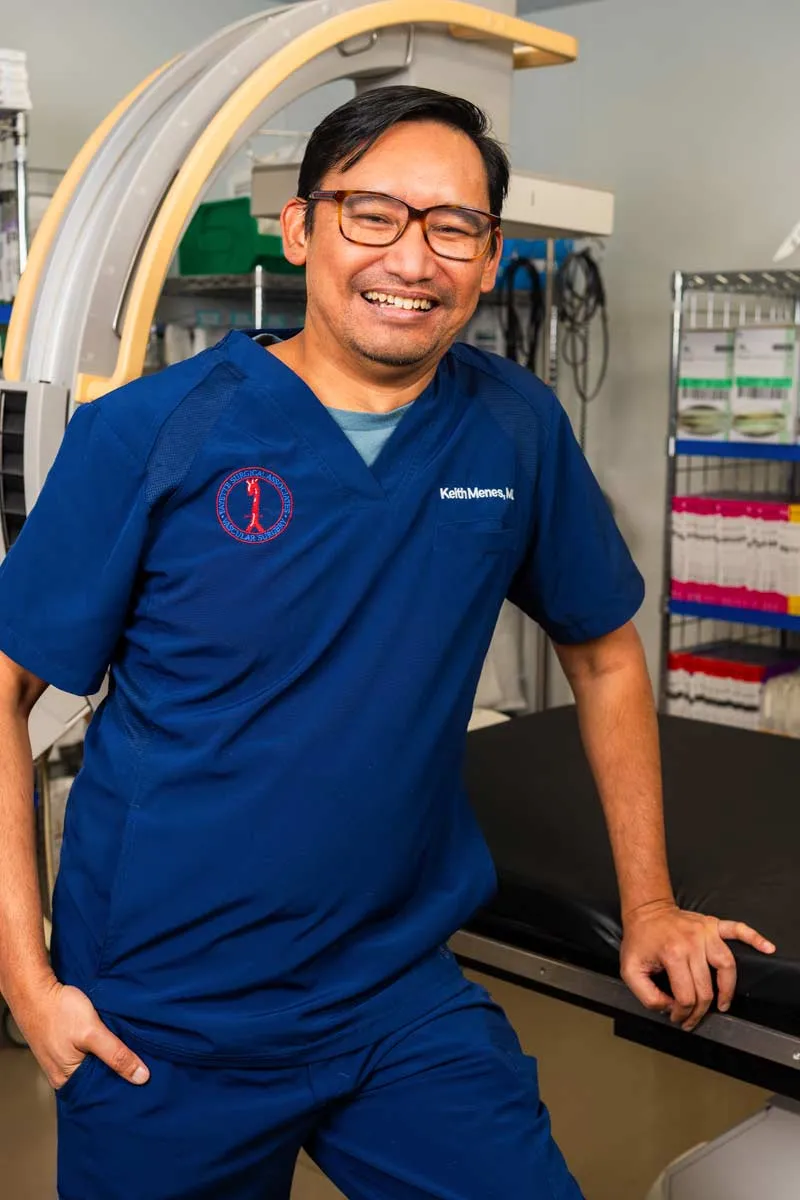
Introducing: Keith Menes, MD
As FSA transitioned in the post-COVID era, its trajectory was shaped not only by clinical innovation but by leadership grounded in collaboration. Among Abedi’s partners, Menes is quick to credit the stewardship that guided the practice through its formative years. “We’re really blessed that Dr. Abedi has the business acumen,” he reflects, “because of his negotiation skills and ability to anticipate the issues of private practice.” Menes stands out not only as a partner, but also as a clinician whose philosophy of care helped crystallize FSA’s identity: technically excellent, bold innovation, and deeply committed to longitudinal patient relationships.
Menes joined FSA in 2015, bringing with him not only technical skill but also an understanding of the demands of modern vascular practice. A native of southern California, he graduated from UCLA before earning his medical degree from Loma Linda University. He completed his general surgery residency at Swedish Medical Center in Seattle, Washington, and fellowship training at Henry Ford Hospital in Detroit. His credentials reflect rigorous preparation and a lifelong commitment to mastery in complex vascular disease management.
It was during residency that Menes recognized a fundamental shift needed in how we approach vascular pathology. “I saw that Americans were not getting healthier,” he recalls. “General surgery often addresses isolated events, whereas vascular surgery allows us to form true longitudinal partnerships with patients—preventing progression, managing chronic disease, and improving quality of life over years, not just moments.”
His practice reflects that philosophy. The majority of his patients—men and women, typically over 60—present with conditions driven by a familiar but powerful combination of genetic predisposition and modifiable risk factors: suboptimal nutrition, physical inactivity, and smoking. Menes is unequivocal about the physician’s responsibility here.
“We have to make it clear that these risk factors are the real drivers,” he says. “A psychology course I took in college taught me a simple truth: intervene at the root of the problem and you solve it. Intervene only at the level of consequence and you never truly fix anything.”
That principle extends directly to how FSA operates. Accessibility is a structural pillar of the practice. “Referring providers frequently contact us saying, ‘I have a patient who urgently needs vascular evaluation,'” Menes explains. “Our answer is immediate: ‘Send them to the office.’ One of our physicians is always present, supported by our experienced PAs and dedicated staff. We routinely see patients the same day, complete necessary imaging and diagnostics, and either admit them or schedule definitive intervention—all within hours.”
This level of responsiveness inevitably creates demanding schedules, yet the practice thrives because of its collaborative culture. “We retain full autonomy in decision-making while leaning heavily on one another,” Menes notes. “Complex cases benefit enormously from real-time discussion among partners who share the same high standards. When a challenging procedure arises late at night, a quick group text identifies who can assist, and we get it done together. Because a team that trusts, is a team that triumphs.”
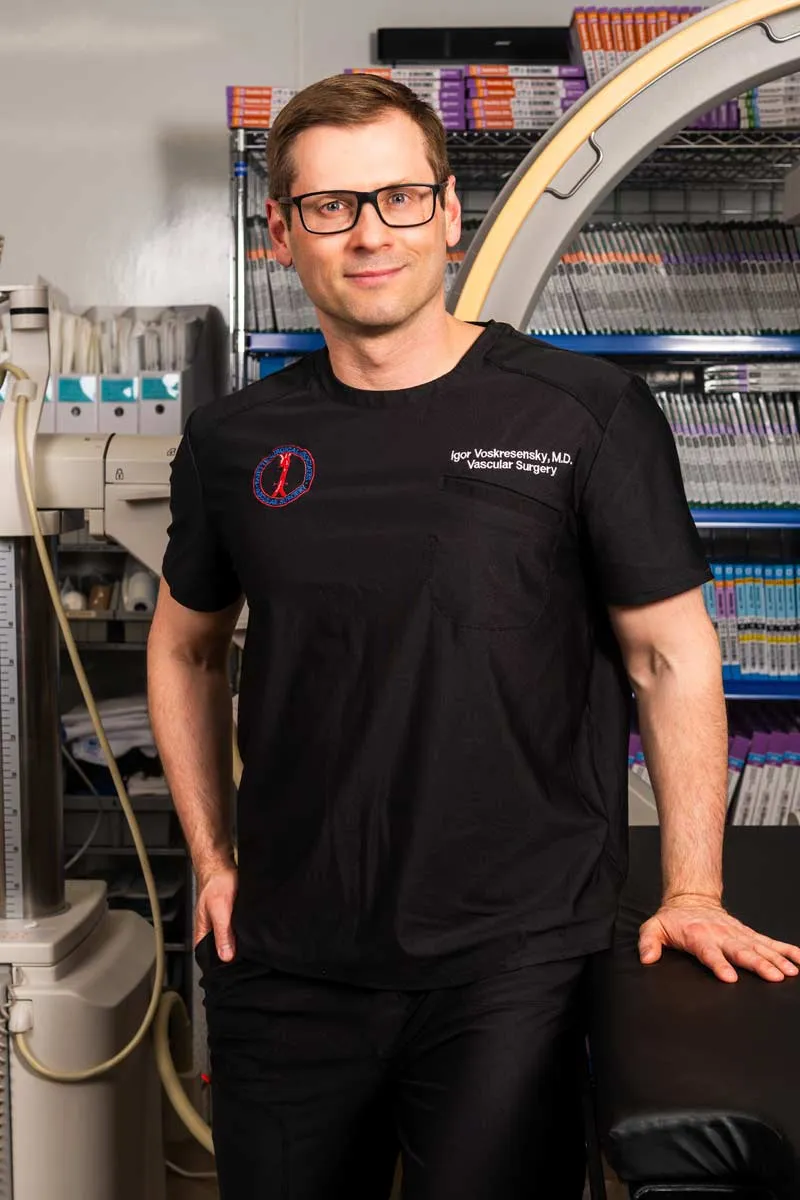
Meet Igor Voskresensky, MD, RPVI
“Our practice is going well because the mentality of the group is very much centered on excellent care,” says Dr. V, as his patients call him, who was the third member to join FSA. “When you provide top notch care, you’re going to succeed regardless of the challenges.”
Born in Russia, Voskresensky moved to the United States at the age of 13 after his parents won a green card lottery. They settled in Lexington where he attended Henry Clay High School and then the University of Kentucky. He attended medical school at Vanderbilt University, where he also completed his general surgery residency and a two-year research fellowship in vein graft injury. He went on to complete a vascular surgery fellowship at the University of Florida.
Voskresensky returned home to Lexington in 2017 to join FSA. “I told my mother I was going to be a surgeon when I was 12 years old, and here I am doing it 30 years later. There’s no other field in medicine that connects you to another human being the way surgery does. Vascular surgery not only does that, but also gives you a chance to be innovative and resourceful. It takes you between the highest of highs and lowest of lows. The greatest reward is when the patients do well, especially in the challenging situations.”
Voskresensky continues, “Our practice is very diverse; we treat a breadth of arterial and venous disease. It’s basically all blood vessels except the brain and the heart. We see many urgent and emergent consultations. What surprised me the most when I started here was the number of young patients with advanced vascular disease. I remember operating on a 38-year-old woman with a completely blocked aorta my first year as an attending surgeon. This is the biggest blood vessel in your body, and to have it happen in a patient that was my age was really shocking. Much of vascular disease and its complications are preventable. Our bodies don’t tell us when we decline a little at a time, they tell us when damage is excessive. I say to my patients, ‘It’s never too late to quit smoking, increase activity, improve your diet, to slow down this decline.'”
“I have seen different models of vascular surgery practices: academic, employed, and now private. We are our own bosses; we do what we think is right for our patients. We truly have a fantastic group here. We enjoy operating together and helping each other in difficult situations. I hear from patients and staff about how great this team is, and it makes me proud and thankful,” says Voskresensky.
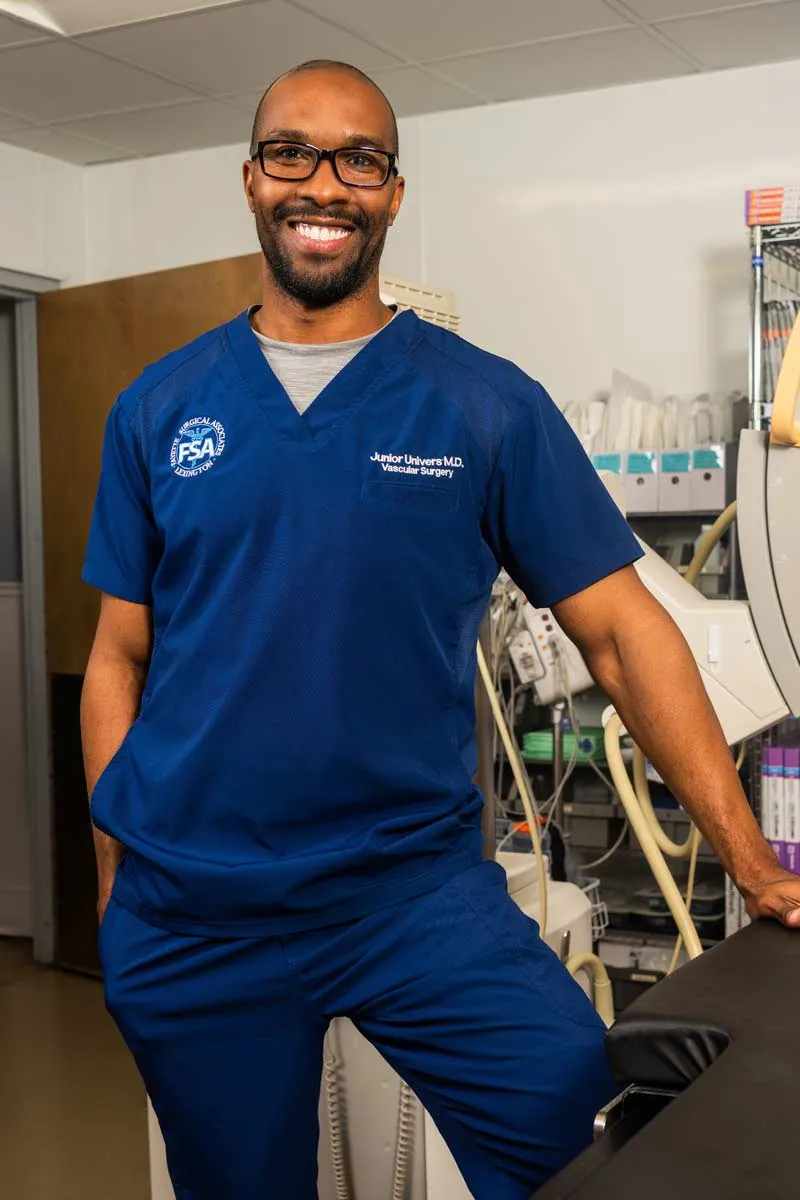
Meet Junior Univers, MD, RPVI
That team atmosphere was what drew Junior Univers to join FSA five years ago. After growing up in West Palm Beach, Florida, Univers attended the University of Florida and then went to medical school at Creighton University. He completed all his surgical training at the University of Tennessee. He started a vascular practice in a hospital in Colorado but realized he wanted something else.
“Through mutual colleagues, I got introduced to the vascular surgery group here,” Univers says. “It was guys my age, similar interests, and our views on what we wanted for the practice were just so similar that we had an instant connection. The way we treat each other around here is like family, just five brothers.”
Univers was also drawn to Lexington because of the lifestyles in the southeast and the resulting need for vascular surgeons in this region of the country.
“One of the main reasons I moved back was this is where you are going to be able to treat the most folks and have the biggest impact,” Univers says, noting the propensity for obesity, smoking, and other lifestyles that contribute to the high vascular pathology rates in the area.
“These are lifelong relationships we’re building. Each time I see a patient, I continue to press on the importance of healthy active living, weight loss, and most importantly, smoking cessation. Two of the big things we continue to preach and try to educate our patients on are the importance of smoking cessation and weight loss,” says Univers.
Univers notes that his patient population includes patients as young as 20-30 years old who have renal disease and need hemodialysis access. Patients in their 40s to 60s often present with peripheral arterial occlusive disease, while the senior patients are more apt to need treatment for aneurysmal and peripheral vascular disease.
“Vascular surgery is such a broad field that it’s never the same thing in clinic one day to the next. Whether it’s from a history of hypertension, diabetes, high cholesterol, or history of smoking, this patient population will likely have multiple vascular pathologies that may need to be treated.”
The complexity and diversity of these cases make the teamwork and camaraderie at FSA that much more important and beneficial for the patients. The depth and diversity of the knowledge and expertise of the five vascular surgeons result in a team approach to diagnosing and treating the problem.
“One of the beautiful things about having partners that are like-minded and accessible is that I could see a patient and think of fixing a problem one way,” Univers says. “I send that problem out to the group, and you now have four other very skilled surgeons looking at that same problem, and you might get three, if not four, different other ways you can attack that same problem. Not only do you have your own background and knowledge to rely on, but you also have access, at a moment of notice, to four other skilled vascular surgeons as well. It allows you to look at situations from so many different angles, and you could tailor a surgical plan that is specifically tailored for that patient.”
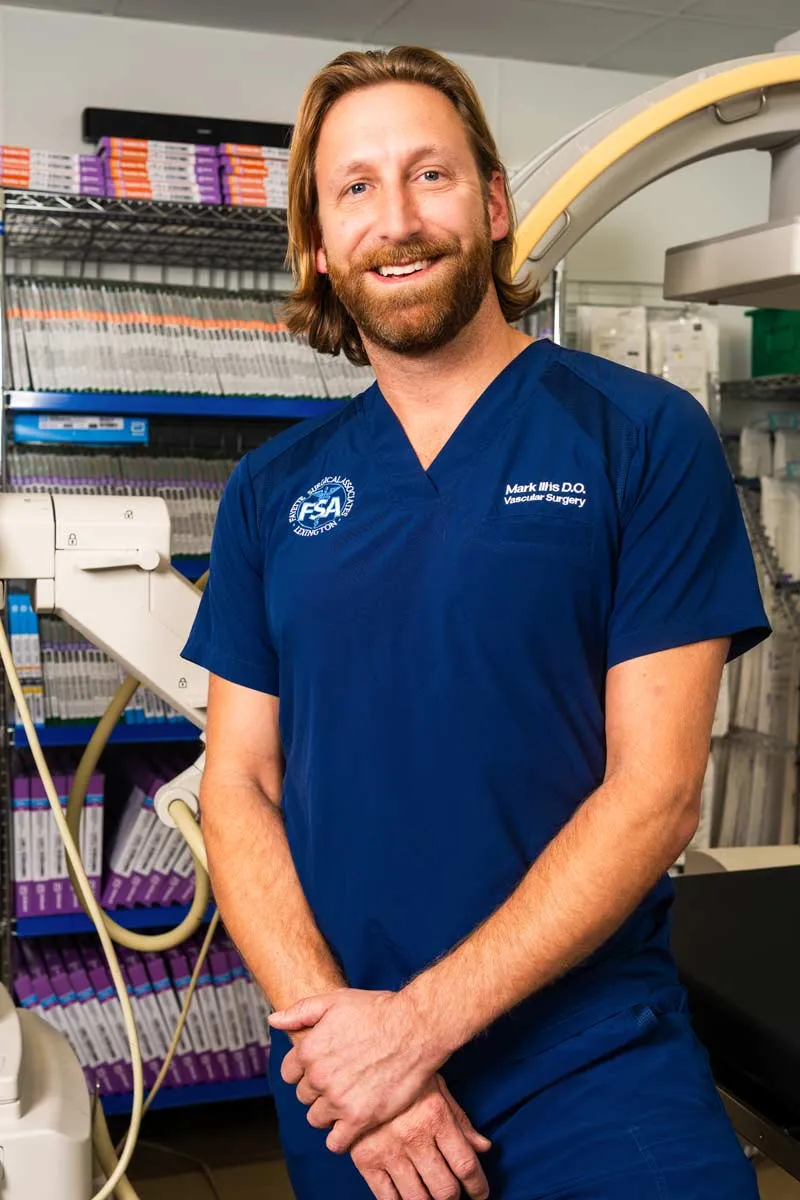
Meet Mark Iltis, DO
The team’s fifth vascular surgeon, Mark Iltis, DO, echoes the value of the team’s camaraderie and shared expertise. It was a vision of that type of setting that moved him to join FSA nearly four years ago.
“It was the private practice, the group of young, ambitious physicians that really inspired me,” Iltis says. “It just felt like a band of brothers.”
Iltis grew up in Sarasota, Florida, and attended the University of Central Florida before earning his master’s degree in medical science in human anatomy at the University of South Florida. He obtained his medical degree from Nova Southeastern University and completed his general surgery residency at the University of Tennessee in Memphis. He then completed his vascular surgery fellowship at the Baylor College of Medicine in Houston. His specialties include open and endovascular surgical treatment of diseases of the aorta, peripheral arterial system, and venous and carotid disease.
The diverse experiences and skillsets of FSA’s five vascular surgeons prepare them for the wide variety of cases presented to them. Similarly, referrals come from a range of sources, but most commonly from primary care and podiatrists.
“The feet are where a lot of the problems will present themselves,” Iltis says. “The feet are the farthest away from your heart. As your blood vessels are diseased, those are the areas that are typically affected first.”
The flexibility and availability of referring to FSA, combined with the expert care patients receive, has formed the foundation for a successful practice.
“I truly believe that I have one of the most special and unique partnerships ever in the history of medicine,” Iltis says. “This job can be extremely stressful. All five of us have each other’s backs. It makes it very manageable. When you are off, you can be off. I know that my partners are all very good at what they do, and I would let them operate on me or my family. Just having that confidence in their ability to take care of people really lets you put your mind at ease.”
The Bond of Brothers
Few relationships match the power of the bond the FSA’s vascular surgeons have formed, but in its relatively short existence, FSA has developed a powerful connection to the community it serves.
“I was on call, and I saw a gentleman that was near his ninth decade of life who had already had an endovascular repair of an aneurysm present with a ruptured aneurysm,” Abedi recalls. “A ruptured aneurysm carries about a 90% mortality. If it ruptures, you are going to bleed to death. Of the 10% that make it into the hospital, only about 50% of those make it out.
“I still remember that patient. He was in agony. His son calmed him down, and I operated on him. He survived, which is like winning the lottery when you are over 90. Well, here’s the interesting part of that. My son plays soccer and a few days later, he says, ‘Dad, did you know you saved the grandpa of one of my best friends on the soccer team?’ That brought what I do home to me. My kids got to see what I do. That was special to me.”
Experiences like these demonstrate the masterful work performed by the hands, brains, and hearts of the artistic vascular surgeons of Fayette Surgical Associates.