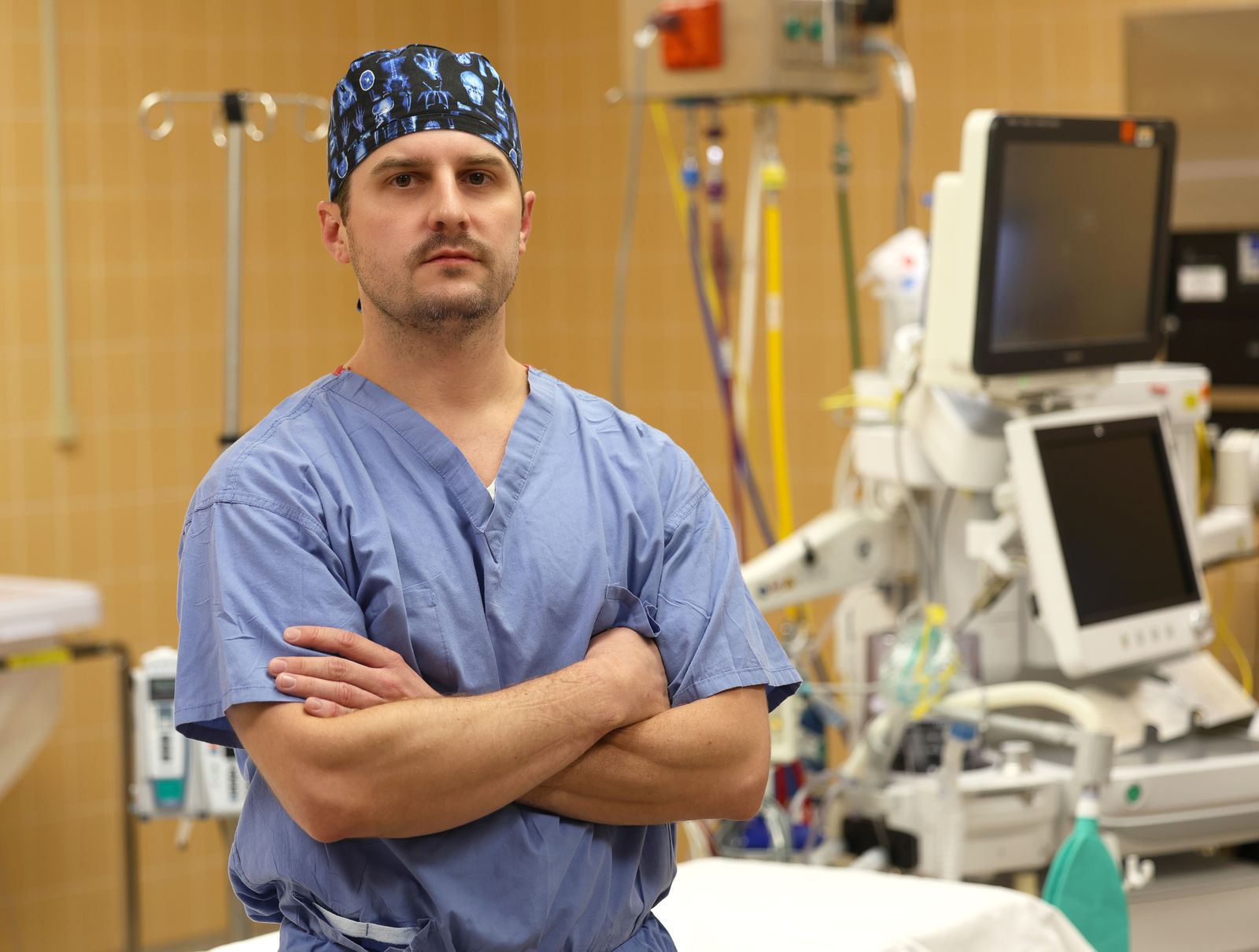
Joshua David Harman, DO, the new medical director for the Norton Cancer Institute’s Orthopedic Oncology department, has hit the ground running.
LOUISVILLE — Teamwork makes the dream work. For Joshua David Harman, DO, medical director of orthopedic oncology for the Norton Cancer Institute and the Norton Orthopedic Institute in Louisville, teamwork has been a key component of his entire life.
“I grew up playing soccer. Team sports have always been something that’s been important in my life,” says Harman, who also has privileges with the Norton Children’s Hospital should he need them. “Orthopedic oncology allows me to work with, and learn from, so many other specialists that I wouldn’t otherwise have contact with, whether that’s musculoskeletal radiology, radiation oncologists, general surgeons, plastic surgeons, or vascular surgeons.”
His most valued teammate, he says, is his wife, Samantha Haraszti, a dermatologist at Forefront Dermatology in Louisville. The couple met while they were both in medical school. After earning his undergraduate degree from Virginia Commonwealth University, Harman earned his medical degree from the Philadelphia College of Osteopathic Medicine and completed a residency in orthopedic surgery at the University of Pittsburgh Medical Center (UPMC). He then completed a fellowship in orthopedic oncology at the University of Florida.
“I really fell in love with it,” Harman says of orthopedic oncology. “Orthopedic oncology is a unique subspecialty that I have learned a wealth from. It sits at this very unique intersection in orthopedics where you utilize medical training from medical school that usually plays a little bit less of a role in orthopedics.”
Harman, who joined Norton Healthcare in October 2025, is already putting together the foundation to be involved in clinical trials.
“The ability to do clinical trials in my practice is extremely valuable,” he says. “What I want to focus on in the first couple of years is establishing a pathway for patients to get in quickly, provide quality of care, and focus on data collection. The clinical trials will be a natural by-product of building the correct infrastructure up front. I want to establish the roots of a quality referral pattern that provides patients the quality and the care that they need right away.”
A Unique Patient Population
With an eye on the future, Harman’s primary focus is on the present. His patient population spans from “ages 2 to 98” and he sees 30 to 40 patients per week. He has full-day clinics on Tuesday and Wednesday, with operations scheduled for Monday and Thursday. Friday consists primarily of administrative duties and meetings.
Harman says that bone-based cancers are more prevalent in the teenage populations and that osteosarcoma and Ewing’s sarcoma have a “slight male predominance”. Patients dealing with soft tissue sarcomas tend to be range in ages 50–79, while metastatic patients tend to range from ages 50–90.
“The highest risk of recurrence in metastasis occurs in the first two years after any treatment,” Harman says. “Cancer in general is a lifetime diagnosis. These individuals will deal with this forever, whether we are performing limb salvage surgery for them or maybe later in their life they require further intervention for revisions to whatever construct we were able to give them.”
Understanding that his patients are dealing with diagnoses and treatments that are daunting and scary, Harman focuses on strong two-way communication with his patients and their families, beginning with the very first meeting.
“It’s a lot of listening. Patients will tell you what’s going on if you let them talk long enough. You don’t want to say too much. You don’t tell them it’s nothing to worry about when you don’t have all of the pieces of information yet. But you have to be reassuring, and you have to listen,” he says. “I think the overarching piece is when they come in, it’s slowing things down, reviewing all of the data together so that they feel they understand the process a lot more. And then outlining the exact next steps with dates for them, so that they have clear, directed goals and they don’t feel overwhelmed. Sometimes I talk to them about what we are missing in order to actually make our diagnosis. ‘Here’s what we don’t know and here’s how we get to know that piece of information,’” he says.
Harman reviews the imaging with the patient, and explains what is and is not certain from that imaging. He makes sure that his patients leave the office with the dates for additional testing and data gathering, as well as their follow-up appointment.
The Teamwork Approach
The weekly Tuesday morning tumor board meeting at the Norton Cancer institute addresses the next steps for patients in diagnosis and treatment. Pathology, radiation oncology, medical oncology, pediatric oncology, and pediatric pathology all attend the meeting to discuss that week’s cases.
Harman shares the story of a forklift driver who presented with an injured hand. After x-rays revealed a hole in the bone in his finger, a biopsy showed a diagnosis of a rare leiomyosarcoma, which is a rare type of cancer that typically develops in the smooth muscles.
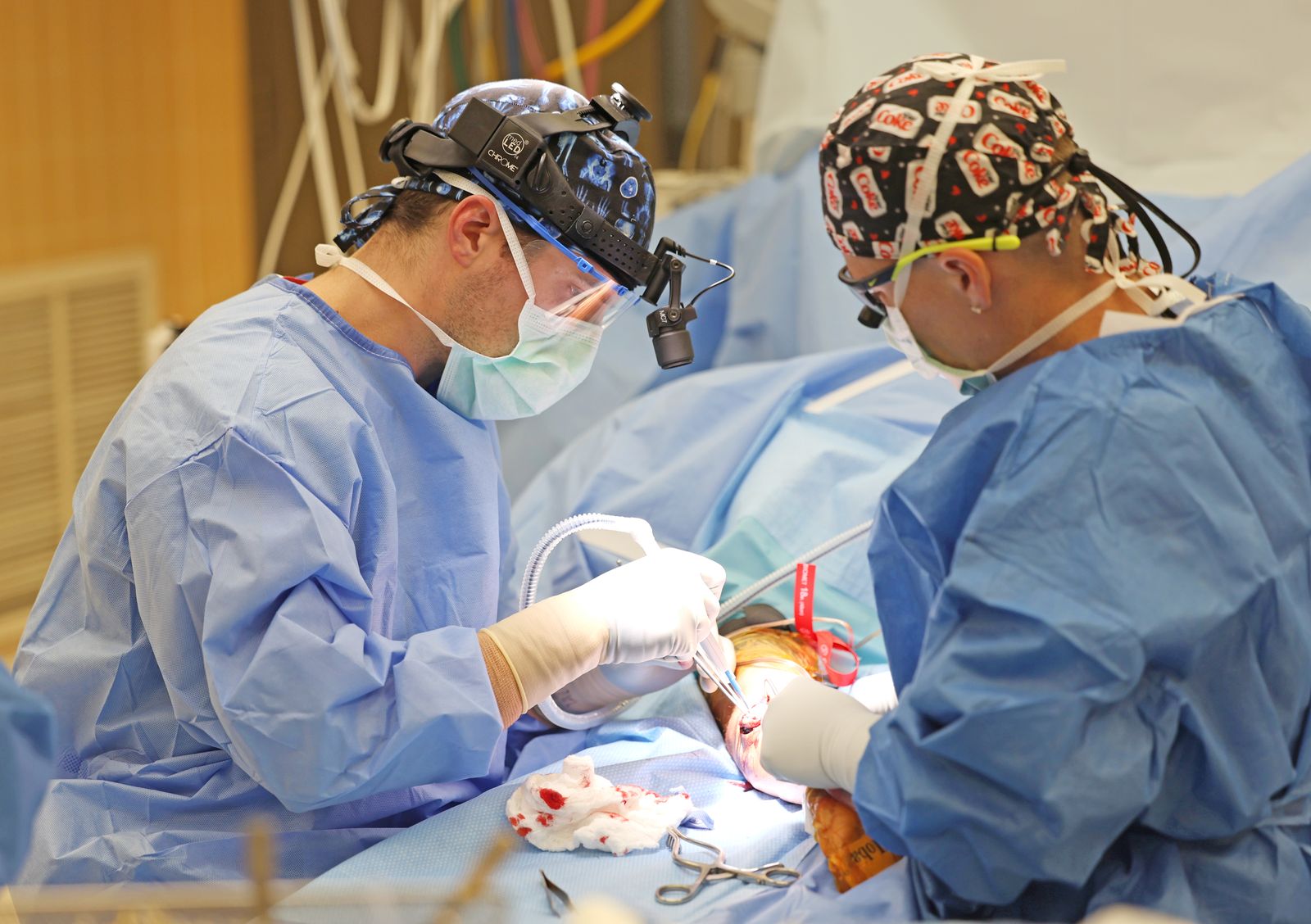
“We were able to successfully perform a ray resection of his middle finger, where we were able to dissect back, preserve the vascular supply to the hand, and preserve the appropriate nerves that were required to maintain function of his index, his ring, and his pinky finger, as well as his thumb,” Harman says. “We were able to take that entire middle finger out with negative margins and close him up. He’s back to work and doing great.”
Such success stories are what make the work all worth it and, to some extent, balances out the less positive outcomes.
“It’s extremely meaningful and rewarding. It can be extremely challenging. It’s impossible not to take some of it home. My wife is an incredible support system in that regard,” Harman says. “For these families, it’s not a common diagnosis, but in that moment, that’s all that matters for them. For me, it’s a constant reminder to be present here, whether I’m listening to them or when I go home with my own kids; to just be grateful for everything that I have. I think that oftentimes in medicine, it is easy to forget that. This particular subspecialty is a rare opportunity to slow down, interact with people, and listen to what’s going on for them.”
The Future Is Bright
As Norton Cancer Institute and the Norton Orthopedic Institute continue to grow in size, capacity, and resources, Harman hopes to bring to fruition his vision of serving the Louisville area.
“I’m extremely grateful to be here in Louisville, and I hope that I’m able to provide for the greater Louisville area a space that we can keep patients here, provide them care locally where they don’t have to travel, and the resources can be kept here in Louisville to expand that care for patients,” Harman says. “I think that we can do it, and I think we have the capabilities of doing it. I’m excited to be able to provide that and build that in time.”
It will take a unified effort – one led, of course, by its team captain.