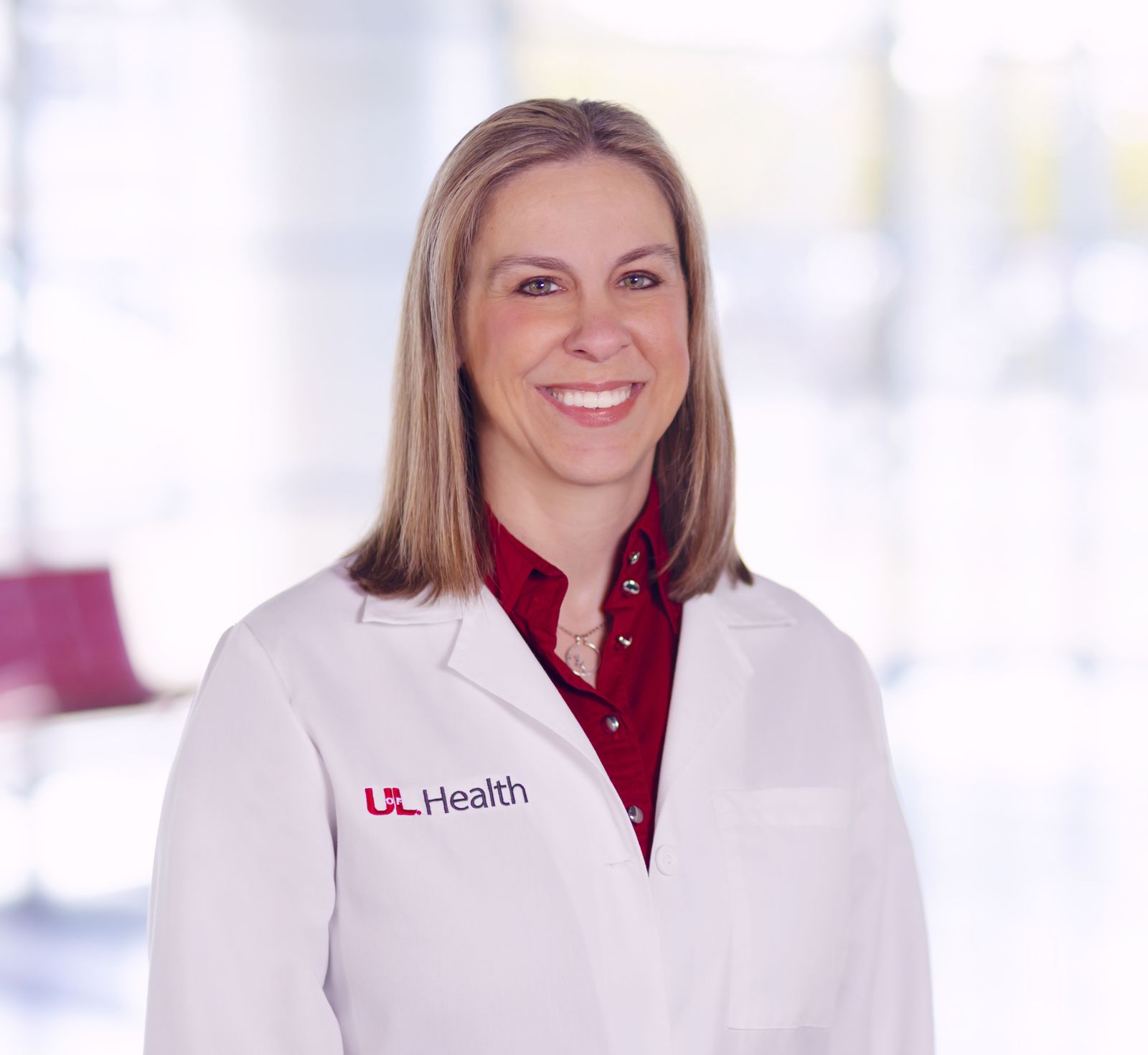
Sandra Kavalukas, MD, UofL Health, combines patient-centered focus and original research to address colorectal cancer
LOUISVILLE — Kentucky is consistently ranked among the top three states for overall cancer rates. Sandra Kavalukas, MD, colorectal surgeon at UofL Health says she sees quite a bit of early-onset colorectal cancer, meaning diagnoses in people under the age of 50. She has seen patients as young as 26, and this isn’t rare. Early-onset colorectal cancer is now the leading cause of death in men under age 45. “It’s a public health crisis,” Kavalukas says.
Though there are many theories on why we are seeing an increase in cancer in young people, nobody knows exactly why. To help figure that out, Kavalukas is conducting a case control study of residents in West Louisville, a lower socioeconomic area which has the highest cancer rates in the state. She is looking at lifetime exposure to cancer-causing elements, including carcinogenic metals like cadmium, nickel, and arsenic, as well as volatile organic compounds that could be released by industry in the area.
Kavalukas is part of the multidisciplinary colorectal cancer team at UofL Health – Brown Cancer Center, and works very closely with UofL’s Environment Institute and School of Public Health to analyze the data and make sense of the assessments. While results are preliminary, they have found these compounds in the air and wastewater. Kavalukas says, “If it’s coming through the air or through the sewer water, it’s washing through our bodies as well.”
Kavalukas hopes her research helps answer the question, “Are the lower socioeconomic classes getting cancer because of a lack of access to care, or is it they live in a place that puts them at higher risk for getting cancer to begin with?
“We know it’s not genetics. Genetics only make up 5% to 10% of cancers out there. And most of the people we’re seeing with the early-onset cancers do not have a family history. So, it’s something else,” she says.
Meet Sandra Kavalukas, MD
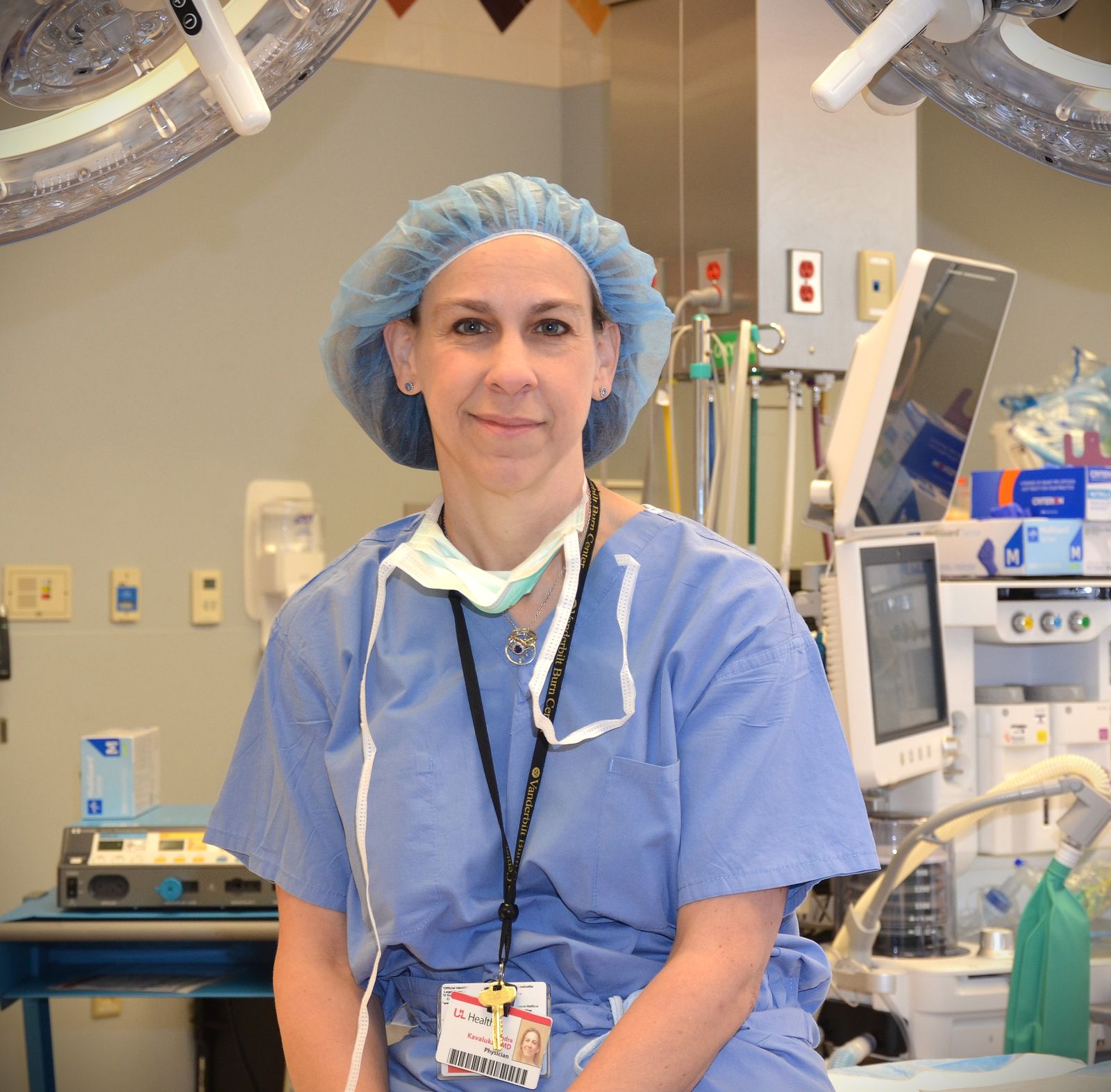
When Sandra Kavalukas started college, medical school wasn’t on her radar. However, after an unconventional career path, she landed in Louisville as an associate professor in the division of colorectal surgery in the department of surgery at the University of Louisville.
Kavalukas initially pursued a dual major in athletic training and physician’s assistant in college. As the training progressed, she discovered she really liked the medical component of the PA program and became a general surgery PA.
After working in private practice for a couple of years, she went to Sinai Hospital of Baltimore. It was there that she developed a deeper interest in medicine and decided to attend medical school. Kavalukas obtained her medical degree at Penn State University in Hershey, followed by a general surgery internship and residency at Vanderbilt and a colorectal surgery fellowship at Cleveland Clinic Florida.
Kavalukas was exposed to colorectal cases early in her training and found the wide variety of issues interesting. “You’re always taking care of some different disease process, which keeps you on your toes,” she says.
She came to UofL Health in 2020, where she appreciates the close-knit feel of the medical center and the ease with which she can collaborate with her colleagues. “It’s just a perfectly-sized medical center,” she says.
A Whole-Patient Approach that Doesn’t Always Lead to Surgery
Kavalukas sees about 45 patients a week, and they run the gamut of ages, shapes, sizes, genders, and races. On any given day she could be treating anal fissures, hemorrhoids, inflammatory bowel disease (IBS), Crohn’s disease, or other anorectal and colorectal disease, providing colonoscopies, performing surgery, or treating cancer.
Her appointment in academic medicine allows her to provide a whole-patient approach to treatment. The goal of the first patient visit is to determine, “What’s the main symptom, what do you want me to fix for you, and can we do that with medications or lifestyle alterations? If we’ve tried and failed, then let’s talk about surgery.”
“I tell my patients that we’re here to try to fix things that are bothering them, and if it’s not bothering them, we don’t need to fix it. My whole-patient approach is symptom management and quality of life management. If we find a cancer, we have to take care of it no matter if it’s symptomatic or not,” she says.
Her patients appreciate the honesty with which she presents diagnoses and treatment plans. Kavalukas says, “I wouldn’t want somebody to not tell me what to expect, not tell me what the risks are, not tell me what we’re getting into. I make sure that I tell my patients the good and the bad in a very straightforward way so there aren’t any surprises.”
The Future of Colorectal Medicine
AI has not yet become as big a player in the colorectal field as it has in other areas of medicine. Kavalukas uses it for accuracy and note-taking during patient visits, but she knows more is coming. “It’s just like the encyclopedia, right? The encyclopedia is gone and now we have to use the internet. AI is going the same way. We have to use it responsibly, but it’s coming whether we like it or not,” she says.
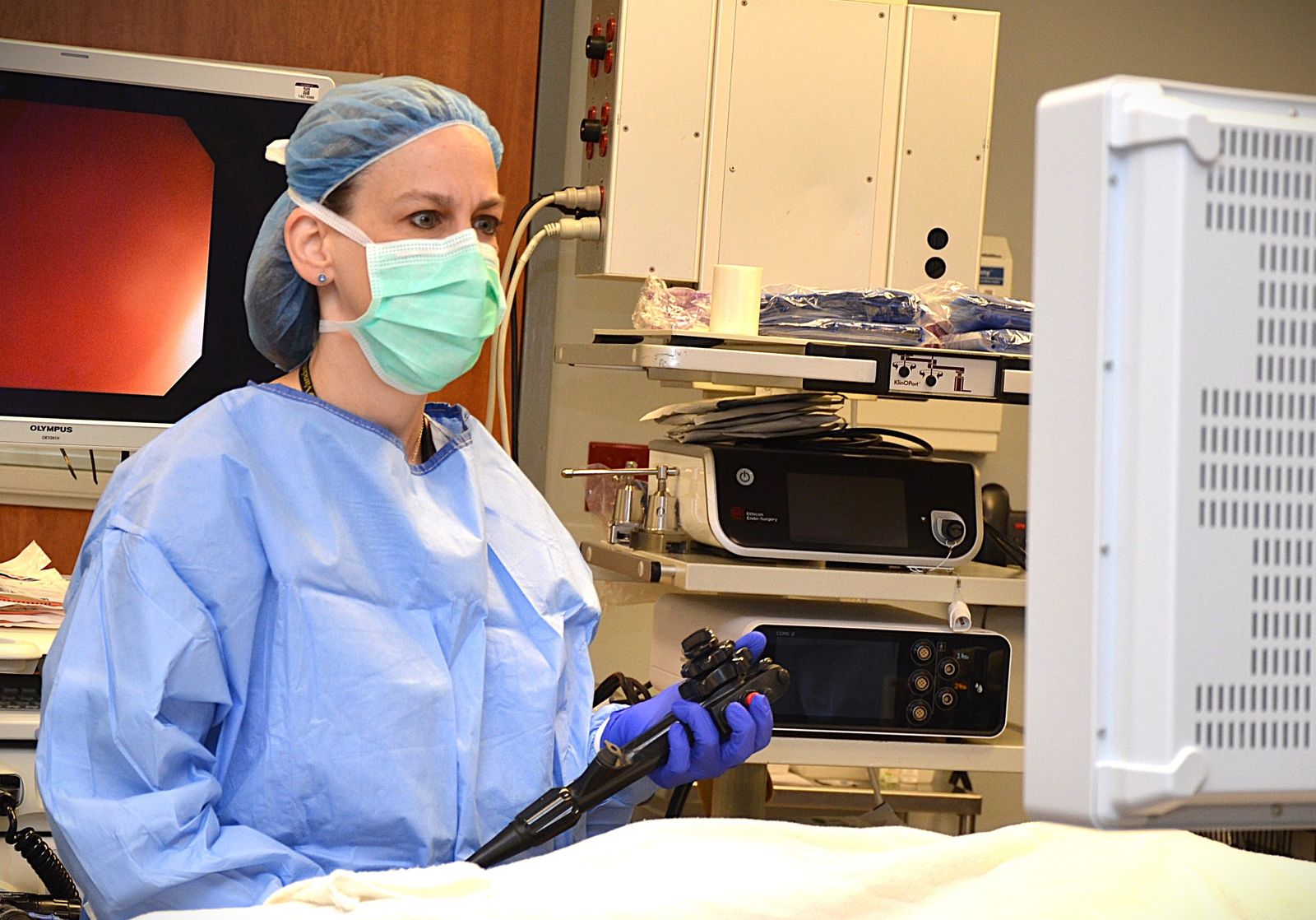
Kavalukas says there are studies about whether AI can detect polyps during a colonoscopy better or more accurately than the practitioners, but the answer isn’t clear yet.
“A lot of the robotic platforms are using overlays with AI that may help you identify and visualize structures, and that is great,” she says.
“The nuance is there are so many decisions that I make during a case that have nothing to do with identifying anatomy. Once I figure out how low my anastomosis is going to be, then I have to think about how old is this patient, how ambulatory are they, how many times a day are they going to go to the bathroom. These are the other quality of life issues that I consider.”
“I don’t foresee a world yet where you’re going to have good outcomes by having a robot do your surgery with no human involved,” Kavalukas says.
The development of better medications, including biologics and biosimilar drugs, that can treat diseases like IBD and at a lower cost to the patients, will continue. “These drugs have been game changers for Crohn’s and ulcerative colitis care,” Kavalukas says.
One big advancement in rectal cancer has been administering chemotherapy and radiation before surgery, instead of after. In about 30% of these cases, the cancer completely goes away and the patients don’t ever require surgery.
Studies are ongoing as to whether these cancers will grow back, but Kavalukas says, “I have several patients who are now four or five years out and it hasn’t grown back. It’s a huge quality of life issue for the patient when we don’t do surgery. We do the surgery only if the cancer is still there.” She hopes to see this protocol transfer to colon cancer treatment as well.
Funding Cuts Lead to Less Screening
Funding for cancer screenings has been cut in recent years. Kavalukas encourages people to contact their legislative representatives and ask that this funding be increased. “Kentucky currently meets the federal benchmark to screen 70% of the population for colon cancer, but we can always do better.”
The Colon Cancer Prevention Project, founded by Whitney Jones, MD, is a leader in securing funding for colonoscopies and colon cancer prevention, say Kavalukas, who is a board member of the CCPP.